


Exercise-Induced Modulation of Heat Shock Protein 70 (HSP70) Expression in Aging Populations: A Systematic Review
Einfluss körperlicher Aktivität auf die Expression von Hitzeschockprotein 70 (HSP70) in alternden Populationen
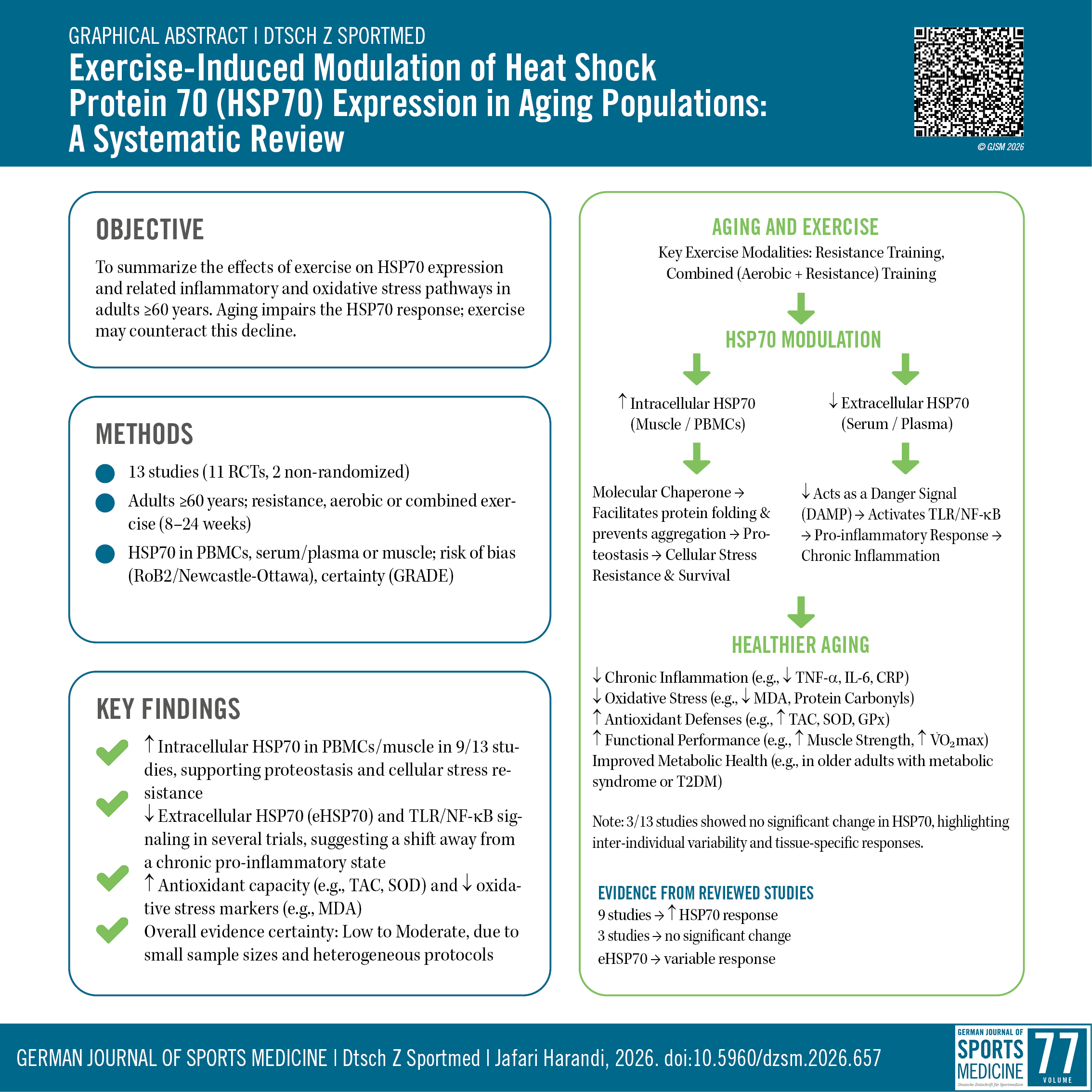
Summary
Heat Shock Protein 70 (HSP70) is a highly conserved molecular chaperone involved in proteostasis, inflammatory regulation and oxidative stress responses. Aging is associated with a reduced capacity to induce HSP70, which may compromise cellular resilience. Exercise is recommended as a key non-pharmacological strategy to counteract age-related functional decline, but its effects on HSP70 signaling in older humans have not been comprehensively summarized. The aim of this review was to synthesize human evidence on how physical exercise affects HSP70 expression and related inflammatory and oxidative stress pathways in aging populations.
Following PRISMA 2020 guidelines, we systematically searched PubMed, Scopus, ScienceDirect and SPORTDiscus from 2012 to May 2025 for peer-reviewed human intervention studies involving adults ≥60 years, a structured exercise component, and at least one HSP70-related outcome. Thirteen studies met the eligibility criteria, including 11 randomized controlled trials and 2 non-randomized/quasi-experimental designs. Most interventions involved resistance or whole-body vibration training, or combined aerobic–resistance programs over 8–24 weeks; a smaller number examined acute exercise tests before and after training.
Across studies, exercise frequently increased intracellular HSP70 or enhanced the heat shock response in immune cells or muscle, while in several trials it reduced chronically elevated extracellular HSP70 or HSP70 acting as a Toll-like receptor ligand. These changes were often accompanied by downregulation of TLR/MyD88/NF-κB signaling and shifts toward a more anti-inflammatory and antioxidant profile, particularly in older adults with metabolic syndrome, type 2 diabetes or post-operative deconditioning. However, some studies reported no clear effect of exercise on HSP70 in the compartments measured, and the direction and magnitude of responses varied with exercise modality, tissue, and health status.
Overall, the available evidence suggests that physical exercise, especially resistance-based and combined training, may beneficially modulate HSP70 and related stress pathways in older adults, but the certainty of evidence is low to moderate due to small sample sizes, heterogeneity of protocols and variable outcome measures. Further well-designed trials are needed to define optimal exercise prescriptions for targeting HSP70-related mechanisms and to clarify the clinical relevance of HSP70 as part of biomarker panels for healthy aging.
Key Words: Molecular Chaperone, Oxidative Stress, Inflammation, Systematic Review, Training, Physical Exercise
Introduction
Aging is characterized by a progressive decline in physiological integrity which leads to increased vulnerability to disease and functional impairment and a general slowing of bodily processes accompanied by an elevated susceptibility to illness (8). At the cellular level, hallmark features of aging include the accumulation of molecular damage, impaired protein homeostasis, chronic low-grade inflammation, and dysregulated stress-signaling pathways; together, these processes disrupt tissue function and compromise organismal resilience (31).
Heat shock proteins (HSPs) are main components of the cellular stress response. Heat Shock Protein 70 (HSP70) is a highly conserved molecular chaperone, which is found in many different types of organisms, plays a key role in proteostasis by facilitating correct protein folding, refolding misfolded proteins to their proper conformation, preventing protein aggregation and assisting in the degradation of irreversibly damaged proteins (13, 24). Beyond proteostasis, HSP70 also engages in the regulation of several intracellular signaling cascades that are critical for cell survival, apoptosis, oxidative stress responses and immune modulation including the NF-κB, JNK, PI3K/AKT, and MAPK pathways (16). Acting at the interface between protein quality control and stress signaling, HSP70 plays a key role in maintaining cellular resilience against metabolic and environmental challenges (2, 23).
Evidence suggests that aging is associated with a reduced capacity to induce HSP70 expression in response to stress, potentially compromising cellular adaptability and survival in aged tissues (30). According to the oxidation–inflammation theory of aging, long-lasting oxidative stress and low-grade, chronic inflammation which is marked by higher levels of reactive oxygen species and pro-inflammatory molecules, along with reduced antioxidant and anti-inflammatory defenses are thought to drive many of the degenerative changes seen in older adults (25). Because oxidative stress and inflammation are interrelated processes, HSP70’s dual role in mitigating oxidative damage and modulating inflammatory signaling suggests that it may act as a central regulator of the aging process (25, 30). Consequently, HSP70 is now seen as an important molecule in the aging process and as a possible marker of healthy aging.
Physical exercise is one of the effective strategies to slow age-related physical decline in older adults (26). Numerous studies in older adults show that exercise improves cardiorespiratory fitness, muscle mass and strength, metabolic health, functional capacity, and quality of life, and is associated with reduced morbidity and mortality (7, 10, 15, 19). Current guidelines recommend that adults aged ≥60 years engage in both aerobic and resistance training to maintain health and independence (18, 27).
Physical exercise is a potent physiological stressor that temporarily disrupts cellular homeostasis and increases HSP70 expression in blood, immune cells, and various tissues. This HSP70 response depends on factors such as exercise type, intensity, and duration, and may support immune regulation, cell protection, and training adaptation (14). For example, short-term moderate aerobic training can rapidly upregulate HSP70 and other stress-responsive proteins in peripheral blood mononuclear cells, even in the absence of overt oxidative damage (12). Intracellular HSP70 supports cell protection and survival, whereas elevated extracellular HSP70 is often linked to cellular damage and pro-inflammatory signaling. Exercise can induce both intracellular and extracellular HSP70, so the balance between these forms and the intensity of the stressor helps distinguish adaptive from potentially harmful responses (5).
The present systematic review therefore addresses the following question: What is the effect of physical exercise on HSP70 expression and its associated signaling pathways in aging humans (≥60 years)? Accordingly, the objective of this review is to evaluate existing human studies to determine how different forms of exercise influence HSP70 levels and related inflammatory and antioxidant responses in older populations.
Materials and Methods
Protocol and Registration
This systematic review was conducted according to the Preferred Reporting Items for Systematic Reviews and Meta‑Analyses (PRISMA) 2020 guidelines. The protocol was drafted prior to screening and has been registered with PROSPERO (registration number: CRD420251053770).
Eligibility Criteria
We defined eligibility using the Population, Intervention, Comparator, Outcomes, and Study design (PICOS) framework (table 1). We included peer-reviewed human studies of older adults (≥60 years) that implemented a structured exercise intervention (aerobic, resistance, whole-body vibration, or combined; acute or chronic) in ambulatory participants and reported HSP70 or related signaling outcomes. We excluded animal and in vitro studies, participants younger than 60 years, studies without an exercise or physical activity intervention, and studies in which exercise was used solely as rehabilitation after immobilization or surgery and was combined with mandatory pharmacological or nutritional co-interventions, as well as articles that did not measure HSP70 or its signaling pathways. Only English-language, peer-reviewed full-text articles were considered.

Information Sources and Search Strategy
We systematically searched four electronic databases: PubMed, Scopus, ScienceDirect, and SPORTDiscus for peer-reviewed human studies published between January 2012 and May 2025. The database-specific search strategies are presented in table 2. Reference lists of all included studies and relevant reviews were also hand-searched to identify additional articles. All records were imported into EndNote 2025, and duplicate entries were removed prior to screening.
Study Selection
Two reviewers independently screened titles and abstracts against the eligibility criteria. Full-text articles of potentially relevant studies were then retrieved and assessed for inclusion. Any disagreements were resolved through discussion; when necessary, a third reviewer was consulted. The study selection process is summarized in the PRISMA 2020 flow diagram (figure 1).
Data Extraction
Using a pre-piloted Excel form, two reviewers independently extracted the following information from each included study:
- Study identifiers (first author, year of publication, country)
- Participant characteristics (age range, health status, and sex/gender distribution where reported)
- Exercise protocol details (modality, frequency, duration, intensity)
- Sample source (e.g., serum, plasma, peripheral blood mononuclear cells, muscle biopsy)
- HSP70 outcome measures (e.g., protein expression assessed by ELISA or Western blot, mRNA expression by qPCR)
- Related signaling pathway markers (e.g., Toll-like receptors, NF-κB, MAPKs, oxidative stress and antioxidant markers)
- Main findings regarding changes in HSP70 expression and associated pathway activity
Discrepancies in extracted data were resolved by consensus or consultation with a third reviewer.
Risk of Bias Assessment
We assessed the risk of bias of randomized controlled trials using the Cochrane Risk of Bias 2 (RoB 2) tool, which evaluates potential bias arising from the randomization process, deviations from intended interventions, missing outcome data, outcome measurement, and selection of the reported result. For non-randomized studies, we used the Newcastle–Ottawa Scale (NOS), which rates methodological quality across three domains: selection, comparability, and outcome. Two reviewers independently performed all risk-of-bias assessments, and disagreements were resolved through discussion with a third reviewer when necessary.  Data Synthesis
We conducted a narrative synthesis of the included studies, organized by sample type (e.g., blood, peripheral blood mononuclear cells, muscle) and by biomarker or signaling pathway category (e.g., HSP70 expression, Toll-like receptor and NF-κB signaling, oxidative stress and antioxidant markers). A random-effects meta-analysis (standardized mean differences with 95% confidence intervals) was planned if three or more studies reported comparable effect measures for changes in HSP70, with heterogeneity quantified using the I² statistic. However, due to the limited number of comparable studies and substantial heterogeneity in exercise protocols, populations, and outcomes, a quantitative meta-analysis was not undertaken, and findings are presented narratively.
Confidence in Cumulative Evidence
We used the Grading of Recommendations Assessment, Development and Evaluation (GRADE) framework to rate the certainty of evidence for the primary outcomes. GRADE considers five domains: risk of bias, inconsistency, indirectness, imprecision, and publication bias. For each outcome (HSP70 expression, inflammatory signaling, and oxidative stress markers), the overall certainty of the evidence was categorized as high, moderate, low, or very low based on these domains.
Results
 Study Selection
A total of 26 full-text articles were assessed for eligibility, of which 13 studies were included in the final review after applying the inclusion and exclusion criteria based on the PICOS framework. The PRISMA 2020 flow diagram (figure 1) illustrates the study selection process, including the number of records at each stage. The main reasons for excluding full-text articles were wrong population (e.g., age <60 years or non-human models), absence of an exercise intervention, lack of HSP70 or related signaling outcomes, immobilization/rehabilitation models, and animal studies (see figure 1 for details).
Study Characteristics
The 13 included studies predominantly enrolled adults aged approximately 60-80 years. Most samples consisted of community-dwelling older adults, while several studies focused on specific clinical or functional groups, including individuals with metabolic syndrome, type 2 diabetes mellitus (T2DM), post-operative elderly patients, or older adults stratified by fitness level. One study included only older men, and two included only older women. Across the included studies with available sex data (12/13 trials; n=378 older participants), approximately 61% were women and 39% were men. Ceci et al. (2014) doesn’t report sex breakdown for its 16 older subjects, so we just can’t add them precisely. Participant characteristics are summarized in table 3.

Exercise interventions varied in modality, duration, and intensity. The majority of studies implemented resistance-based training protocols (traditional strength training or explosive/moderate resistance training), with program durations ranging from 8 to 24 weeks and typical frequencies of 2–3 sessions per week. Additional interventions included dynamic resistance training with elastic bands, whole-body vibration training, combined (aerobic plus resistance) training in older adults with metabolic syndrome, and a single graded maximal exercise test or cardiopulmonary exercise test before and/or after a training period. One study examined the effects of resistance training in elderly post-operative patients, and another compared older adults with higher versus lower cardiorespiratory fitness.
HSP70 was assessed in different biological compartments and using various analytical techniques. Six studies measured intracellular HSP70 in peripheral blood mononuclear cells (PBMCs), five studies assessed circulating (serum or plasma) HSP70 or HSP72, and two studies evaluated HSP70 content in skeletal muscle biopsies. Methods included ELISA for circulating HSP70, Western blotting for intracellular or tissue HSP70, and combined Western blot/qPCR approaches in selected studies. Several trials also evaluated additional stress-related proteins (e.g., HSP27, HSP60, αB-crystallin), inflammatory markers (e.g., Toll-like receptors, TNF-α, IL-6, IL-10, CRP), and oxidative stress/antioxidant indices (e.g., malondialdehyde, total antioxidant capacity, superoxide dismutase, glutathione peroxidase; table 3).
HSP70 Outcomes
All 13 studies reported data on HSP70 or closely related HSP70-family proteins. In most trials, exercise was associated with favorable modulation of HSP70, particularly in intracellular compartments. Several resistance and whole-body vibration training programs increased HSP70 expression in PBMCs or muscle, often alongside improvements in functional or clinical outcomes. For example, explosive or moderate resistance training in older adults tended to upregulate HSP70 (and sometimes HSP27) in PBMCs, whereas whole-body vibration in older individuals with metabolic syndrome increased intracellular HSP70 and was accompanied by beneficial changes in inflammatory markers. Dynamic resistance exercise in women with metabolic syndrome also led to increased HSP70, with changes in HSP70 correlating positively with favorable shifts in lipids and inversely with inflammatory markers.
In muscle, baseline HSP70 content was generally higher in elderly compared with young individuals. Strength training in older adults appeared to “normalize” aspects of this stress profile, with some studies reporting attenuation of initially elevated HSP70 in elderly trainers while younger participants showed increased expression of certain heat shock proteins and small HSPs. In elderly patients with T2DM, a period of resistance training enhanced the capacity of PBMCs to release HSP72 in response to heat stress, suggesting a partial restoration of an initially blunted heat shock response.
Exercise-related decreases in HSP70 were mainly observed in the circulation. High-load resistance training reduced serum HSP70 (eHSP70) in older women, and in one study of post-operative elderly patients, resistance training lowered circulating HSP70 acting as a Toll-like receptor ligand, together with other stress ligands, in parallel with improved cardiorespiratory fitness and functional capacity. In these contexts, a reduction in basal extracellular HSP70 was interpreted as a potential shift toward a less pro-inflammatory milieu rather than a detrimental adaptation.
Three studies reported no significant effect of exercise on HSP70 levels despite improvements in other outcomes. In one trial, an acute cardiopulmonary exercise test did not significantly alter HSP70 in older adults with different fitness levels. In another, 12 weeks of resistance training with or without heat exposure did not change circulating HSP72 in elderly women, although muscle mass, strength, and IGF-1 improved. In a third study of septuagenarians receiving vitamin C and E supplementation, leukocyte Hsp72 decreased similarly in both the aerobically trained and the sedentary supplemented groups, indicating that antioxidant supplementation, rather than training, drove the observed change.
 Taken together, the included studies indicate that exercise in aging populations can both increase intracellular HSP70 (supporting proteostasis and cellular stress resistance) and, in some cases, decrease chronically elevated extracellular HSP70 or HSP70 ligands (potentially reducing pro-inflammatory signaling). However, the direction and magnitude of these effects vary across interventions and populations. A summary of the main patterns of HSP70, inflammatory, and antioxidant responses across the included studies is presented in table 4.
Signaling Pathway Markers and Oxidative Stress
Several studies simultaneously assessed HSP70 and markers of inflammatory signaling. Whole-body vibration and resistance training in older adults with or without metabolic syndrome were associated with downregulation of Toll-like receptor (TLR2/TLR4)–MyD88 signaling and reduced activation of downstream kinases such as p38 MAPK and NF-κB, together with increases in anti-inflammatory mediators (e.g., IL-10) and decreases in CRP. In one trial, exercise reduced HSP60 and other danger-associated molecular patterns while increasing HSP70 and ERK1/2 activation, suggesting a coordinated shift toward a less pro-inflammatory and more adaptive signaling profile. In postoperative elderly patients, resistance training decreased TLR4 signaling components and TLR4 ligands (including circulating HSP70 and serum amyloid A), in parallel with improvements in V˙O₂max and functional status.
Oxidative stress and antioxidant responses were also examined in several studies. Short-term aerobic or resistance training often improved redox balance, as evidenced by reductions in protein and lipid oxidation markers (e.g., malondialdehyde, protein carbonyls) and increases in antioxidant capacity or antioxidant enzymes. Some trials showed that after a period of training, an acute exercise bout elicited a more robust but controlled induction of HSP70 and HSP27, with a better oxidative stress profile compared with pre-training, suggesting early redox adaptation. Combined (aerobic plus resistance) training in older men with metabolic syndrome increased HSP70 and total antioxidant capacity while lowering oxidative stress markers. In one study, antioxidant supplementation with vitamins C and E reduced oxidative stress markers and leukocyte Hsp72 in septuagenarians, whereas the addition of moderate-intensity aerobic training did not provide further changes beyond supplementation.
Collectively, these findings support a link between exercise-induced modulation of HSP70 and broader adaptations in inflammatory and oxidative stress pathways in older adults. Nonetheless, the strength and consistency of these associations differ across exercise modalities, health conditions, and outcome compartments (blood, PBMCs, muscle), underscoring the heterogeneity of molecular responses to exercise in aging.

Risk of Bias and Certainty of Evidence
Risk-of-bias assessments for randomized controlled trials are summarized in table 5. Most trials were judged to be at low overall risk of bias according to the RoB 2 tool, although some concerns were noted in a minority of studies, particularly in the domains related to the randomization process and deviations from intended interventions. The two non-randomized studies generally showed good methodological quality on the Newcastle-Ottawa Scale (table 6), with occasional downgrades due primarily to limited comparability between groups or incomplete reporting of outcomes.

Using the GRADE framework, the certainty of evidence for exercise-induced changes in HSP70 expression was rated as low to moderate, with downgrades mainly due to moderate risk of bias, inconsistency across studies, and imprecision related to small sample sizes and relatively wide confidence intervals. For inflammatory signaling outcomes, the certainty of evidence was judged to be moderate, whereas for oxidative stress and antioxidant markers it was rated as low, reflecting the smaller number of available studies, greater heterogeneity, and imprecision in these measures (table 7). Overall, the available evidence suggests that exercise may beneficially modulate HSP70 and related inflammatory and oxidative stress pathways in older adults, but the modest sample sizes, heterogeneity of interventions, and methodological limitations warrant cautious interpretation.
Discussion
This systematic review examined the effects of physical exercise on Heat Shock Protein 70 (HSP70) expression and related signaling pathways in aging humans (≥60 years). Across 13 studies involving mainly resistance-based and combined training interventions in older adults, the available evidence suggests that exercise may favorably modulate HSP70, inflammatory signaling, and oxidative stress markers. However, these effects were not uniform across all trials or tissues, and the overall certainty of evidence is low to moderate for HSP70 and low for oxidative stress outcomes.
Summary of Main Findings
Most included studies reported that exercise was associated with beneficial changes in HSP70 expression in at least one biological compartment. Resistance training, whole-body vibration, and combined (aerobic plus resistance) programs frequently increased intracellular HSP70 in peripheral blood mononuclear cells (PBMCs) or skeletal muscle, or enhanced the capacity of cells from older adults to mount a HSP70 response to stress. In contrast, several studies observed decreases in basal circulating HSP70 (eHSP70) or in HSP70 acting as a Toll-like receptor (TLR) ligand after training, particularly in older women undergoing high-load resistance training or in post-operative elderly patients. In those contexts, lower extracellular HSP70 was interpreted as a shift away from a chronically activated, pro-inflammatory state rather than a loss of protection.
At the same time, three trials reported no significant change in HSP70 despite clear improvements in functional or physiological outcomes. An acute exercise test did not alter HSP70 in older adults with differing fitness levels, and in elderly women, 12 weeks of resistance training with or without heat exposure did not modify circulating HSP72, even though muscle mass, strength, and IGF-1 increased. These null findings emphasize that HSP70 is not a universal or obligatory marker of adaptation in older individuals and that some beneficial training effects can occur without detectable changes in HSP70 in the compartments measured.
Taken together, the results indicate that exercise might upregulate intracellular HSP70 and normalize or reduce chronically elevated extracellular HSP70 in older adults, but the direction and magnitude of response depend on exercise characteristics, health status, and the site of measurement.
Exercise Modality, Dose, and Tissue-Specific Responses
A key observation from the included studies is the heterogeneity of HSP70 responses across exercise modalities and tissues. Multi-week resistance training and whole-body vibration were most commonly associated with increased intracellular HSP70, particularly in PBMCs and, in some cases, muscle. Dynamic resistance training and combined training in older adults with metabolic syndrome also enhanced HSP70, suggesting that even moderate-load or elastic-band protocols can activate stress-protective chaperone systems in this population.
By contrast, changes in circulating HSP70 were more variable. High-load strength training in older women and resistance training in post-operative elderly patients tended to reduce serum HSP70 or HSP70-related ligands, while some other studies found no change in extracellular HSP70 after shorter or less intensive interventions. This pattern is consistent with the notion that intracellular HSP70 (iHSP70) primarily supports proteostasis, cell survival, and stress tolerance, whereas extracellular HSP70 (eHSP70) can behave as a danger signal, interacting with TLRs and contributing to inflammation. In aging individuals with metabolic or cardiovascular comorbidities, elevated baseline eHSP70 may reflect chronic cellular stress; thus, training-induced reductions in circulating HSP70 could represent a beneficial “de-stressing” of the system.
In skeletal muscle, baseline differences between young and older adults were noted in some studies, with elderly participants showing higher expression of HSP70 and other stress proteins. After resistance training, older adults often exhibited normalization or modest reductions in muscle HSP70, whereas younger participants tended to increase certain HSPs and small HSPs. These tissue-specific and age-specific patterns suggest that exercise does not simply “increase HSP70” but rather helps to recalibrate stress protein expression according to prior load, baseline status, and adaptive needs.
Intracellular versus Extracellular HSP70
The distinction between iHSP70 and eHSP70 is particularly important when interpreting these findings. Intracellular HSP70 functions as a molecular chaperone that supports protein folding, prevents aggregation, and assists in the degradation of damaged proteins, thereby promoting cell survival under stress. Several studies in this review showed that resistance training, whole-body vibration, or combined programs in older adults can increase iHSP70 in PBMCs or improve the heat shock response, which may enhance the capacity of immune and muscle cells to tolerate metabolic and mechanical stress.
In contrast, elevated extracellular HSP70 has been associated with cellular damage and pro-inflammatory signaling through TLRs and related pathways. In older women and post-operative patients, reductions in circulating HSP70 and other stress ligands after training coincided with improvements in cardiorespiratory fitness, functional status, or metabolic markers. This pattern is consistent with the idea that effective training in older adults may simultaneously strengthen intracellular chaperone defenses and reduce chronic, danger-associated extracellular signaling.
Overall, the available data support a model in which exercise in aging populations may differentially modulate iHSP70 and eHSP70, with potential implications for both cellular resilience and systemic inflammation. However, relatively few studies have measured both intracellular and extracellular compartments within the same participants, and future work is needed to clarify how these two pools of HSP70 interact over time with repeated exercise.
Links to Inflammatory and Oxidative Stress Pathways
Several included studies simultaneously assessed HSP70 and markers of inflammatory signaling. In older adults with or without metabolic syndrome, resistance and whole-body vibration training were associated with downregulation of TLR2/TLR4–MyD88 signaling, reduced NF-κB pathway activation, and lower levels of pro-inflammatory ligands such as HSP60 and serum amyloid A. At the same time, anti-inflammatory mediators such as IL-10 often increased. These patterns suggest that exercise-induced HSP70 modulation may contribute to a broader shift from a pro-inflammatory to a more regulated immune profile in older adults.
Similarly, improvements in oxidative stress and antioxidant defenses were observed in several trials. Short-term or multi-week training reduced markers of protein and lipid oxidation and increased antioxidant capacity or the expression of antioxidant enzymes. In some studies, early increases in HSP70 and other stress-responsive proteins after the first exercise session were followed by lower resting oxidative damage and dampened stress marker expression after several days or weeks of training, consistent with an “early redox adaptation” model. Combined training in older men with metabolic syndrome, for example, enhanced HSP70 and total antioxidant capacity while attenuating oxidative stress markers.
Together, these findings support a plausible mechanistic link between exercise-induced HSP70 responses and the modulation of inflammatory and redox pathways in aging. Nevertheless, the number of studies assessing HSP70, inflammation, and oxidative stress in an integrated manner is still limited, and causal relationships cannot be firmly established.
Null Findings and Sources of Heterogeneity
Importantly, not all studies included in this review reported significant changes in HSP70. In the acute setting, a single maximal exercise test did not alter HSP70 in older adults, despite expected increases in IL-6 and other functional responses. In another trial, 12 weeks of resistance training in elderly women improved muscle cross-sectional area, strength, and IGF-1 without changing circulating HSP72. These null findings may reflect multiple factors, including insufficient stimulus duration or intensity, high inter-individual variability, baseline HSP70 levels, or the specific compartment measured (serum versus PBMCs or muscle).
Beyond these examples, heterogeneity in study design, population, and outcomes is a major limitation of the current evidence base. The included studies varied in exercise modality (traditional resistance, whole-body vibration, dynamic resistance, combined training, acute cardiopulmonary testing), program length (single sessions to six months), training intensity and frequency, and participant health status (healthy older adults vs metabolic syndrome vs type 2 diabetes vs post-operative patients). HSP70 was measured using different methods (ELISA, Western blot, qPCR) and in different tissues and fluids. In addition, sample sizes were generally small, which increases the risk of type II error and unstable estimates.
These sources of heterogeneity likely contribute to the inconsistent findings across studies and underpin the low to moderate certainty of evidence for HSP70 and the low certainty for oxidative stress markers. They also highlight the importance of careful interpretation: the absence of a statistically significant change in HSP70 in a given study does not necessarily mean that exercise has no impact on stress responses in those participants.
Clinical and Practical Implications
Despite these limitations, the pattern of findings has several potential practical implications. First, resistance training and other muscle-loading modalities appear to be important stimuli for modulating HSP70 and related molecular pathways in older adults. This is consistent with current recommendations that emphasize resistance training as a key strategy to counter age-related declines in muscle mass, strength, and function. The evidence from this review suggests that, in addition to improving physical performance, such training may partly act through enhancing intracellular stress defenses and tempering chronic inflammatory signaling.
Second, the divergent behavior of iHSP70 and eHSP70 implies that simply measuring total circulating HSP70 may not be sufficient to understand the health impact of exercise-related changes. In older or metabolically compromised individuals with elevated basal eHSP70, a decrease in circulating HSP70 after training could be beneficial, while increases in iHSP70 in PBMCs or muscle may reflect improved stress tolerance. Future clinical practice and research might therefore benefit from distinguishing these compartments and, where feasible, incorporating HSP70-related measures into broader biomarker panels for monitoring training adaptation in older adults.
Finally, given the observed associations between HSP70 changes and shifts in TLR/NF-κB signaling, oxidative stress markers, and cytokine profiles, exercise programs for older adults, particularly those with metabolic or cardiovascular comorbidities, might be designed with both functional capacity and molecular adaptation in mind. However, the current evidence is not sufficient to define an “optimal” dose or modality of exercise specifically for targeting HSP70 pathways.
Strengths and Limitations of the Review
This review has several strengths. It is, to our knowledge, one of the first systematic syntheses focusing explicitly on exercise-induced HSP70 responses and related signaling pathways in aging humans. The review followed PRISMA guidelines and a pre-registered protocol, used multiple databases, and applied established tools (RoB 2, NOS, and GRADE) to evaluate study quality and certainty of evidence. We also considered both intracellular and extracellular HSP70 and integrated data on inflammatory and oxidative stress pathways.
However, important limitations should be acknowledged. First, the number of eligible studies was relatively small, and most had modest sample sizes, which limits statistical power and the generalizability of findings. Second, heterogeneity in exercise protocols, populations, and outcome measures prevented quantitative meta-analysis and complicated direct comparisons across studies. Third, many trials did not report sex-specific results or did not clearly specify sex/gender distribution, limiting conclusions about possible sex differences in HSP70 responses. Fourth, publication bias cannot be ruled out, as studies with null or negative findings may be underrepresented in the published literature. Finally, our focus on older adults and exercise-based interventions means that relevant mechanistic insights from younger populations, animal models, or non-exercise stressors were only considered qualitatively.
Future Directions
Future research should aim to address these gaps by conducting larger, well-designed randomized controlled trials that standardize exercise protocols and outcome assessments where possible. Studies directly comparing different exercise modalities (e.g., high- vs moderate-intensity resistance training, whole-body vibration vs traditional resistance, combined vs single-modality training) in older adults would be particularly informative. The simultaneous measurement of iHSP70 and eHSP70, along with key inflammatory and oxidative stress markers, could help clarify the temporal and causal relationships between these pathways.
In addition, there is a need to investigate whether specific subgroups, such as older adults with metabolic syndrome, type 2 diabetes, or post-operative status, show distinct HSP70 responses or require tailored exercise prescriptions. Integrating molecular outcomes like HSP70 into clinical trials that already measure functional capacity, quality of life, and clinical events could also help determine the clinical relevance of HSP70 modulation. Ultimately, a better understanding of how exercise influences HSP70 and its associated signaling networks in aging humans may contribute to more precise, mechanism-informed exercise recommendations for healthy aging and disease prevention.
Conclusion
This systematic review suggests that physical exercise, particularly resistance-based and combined training, may modulate Heat Shock Protein 70 (HSP70) and related signaling pathways in older adults. Across the 13 included studies, exercise often increased intracellular HSP70 in immune cells or muscle and, in some cases, reduced chronically elevated extracellular HSP70, alongside shifts toward a less pro-inflammatory and more antioxidant profile. However, these effects were not uniform, and several trials reported no clear change in HSP70 despite improvements in strength, muscle mass, or functional capacity.
Taken together, the available evidence supports the view that HSP70 is a plausible molecular mediator of some exercise-induced adaptations in aging, but the overall certainty of evidence is low to moderate, limited by small sample sizes, heterogeneous interventions, and variability in outcome measures and tissues studied. At present, HSP70 cannot be considered a definitive biomarker of exercise response in older adults, but it remains a promising candidate within a broader panel of stress and inflammatory markers.
Future research should use larger, well-designed randomized trials to clarify how different exercise modalities, intensities, and durations influence intracellular versus extracellular HSP70, and how these changes relate to clinical outcomes such as physical function, metabolic health, and incident disease. Integrating HSP70 and other molecular biomarkers into exercise-based interventions for older adults may ultimately help refine training prescriptions and move toward more precise, mechanism-informed strategies for healthy aging.
Conflict of Interest
The authors have no conflict of interest.
Ethical Approval
Ethical approval was not required, as this review used only previously published human studies. The protocol was pre-registered with PROSPERO (CRD420251053770) to ensure transparency and methodological rigor.
Funding
This research received no external funding.
Informed Consent Statement
Not applicable.
Data Availability Statement
The data used to support the findings of this study are included within the article.
Acknowledgments
The authors gratefully acknowledge the support of the Faculty of Physical Education and Sports Sciences at Allameh Tabataba’i University for providing access to library resources and research facilities.
Summary Box
What is already known about this topic?
Heat Shock Protein 70 (HSP70) is a stress-inducible molecular chaperone involved in proteostasis, inflammatory signaling, and redox balance. Aging is associated with a reduced capacity to mount an HSP70 response, which may weaken cellular stress resistance. Regular physical exercise is recommended to counteract age-related declines in muscle function, cardiometabolic health, and functional independence in older adults.
What does this review add?
This systematic review of 13 human studies in adults ≥60 years suggests that exercise – particularly resistance and combined training – can modulate HSP70 in older adults, most often by increasing intracellular HSP70 or restoring a blunted heat shock response, while in some cases reducing chronically elevated extracellular HSP70. Several trials also indicate that these changes are accompanied by shifts in inflammatory and oxidative stress pathways, including downregulation of TLR/NF-κB signaling and improvements in antioxidant or anti-inflammatory markers, although effects are not consistent across all studies and tissues.
Practical implications
Exercise may be considered not only as a functional intervention but also as a strategy to influence molecular stress-adaptation pathways in older adults, including HSP70-related mechanisms. However, given the low to moderate certainty of the current evidence and the presence of null findings, HSP70 is not yet ready for routine clinical use as a standalone biomarker of exercise effectiveness; its greatest near-term value is likely as part of research-oriented panels aimed at refining mechanism-based exercise prescriptions for healthy aging.
References
- Dynamic Resistance Exercise Alters Blood ApoA-I Levels, Inflammatory Markers, and Metabolic Syndrome Markers in Elderly Women. Healthcare (Basel). 2022; 10: 1982.
- With or without You: Co-Chaperones Mediate Health and Disease by Modifying Chaperone Function and Protein Triage. Cells. 2021; 10: 3121.
- Changes of stress proteins and oxidative stress indices with progressive exercise training in elderly men. Sci Sports. 2017; 32: 152-159.
- Explosive type of moderate-resistance training induces functional, cardiovascular, and molecular adaptations in the elderly. Age (Dordr). 2014; 36: 759-772.
- eHSP70/iHSP70 and divergent functions on the challenge: effect of exercise and tissue specificity in response to stress. Clin Physiol Funct Imaging. 2017; 37: 99-105.
- Do skeletal muscle composition and gene expression as well as acute exercise-induced serum adaptations in older adults depend on fitness status? BMC Geriatr. 2021; 21: 697.
- Health benefits of aerobic training programs in adults aged 70 and over: a systematic review. Arch Gerontol Geriatr. 2017; 69: 110-127.
- The landscape of aging. Sci China Life Sci. 2022; 65: 2354-2454.
- Oxidative stress responses to a graded maximal exercise test in older adults following explosive-type resistance training. Redox Biol. 2014; 2: 65-72.
- Weight strategy in older adults with obesity: calorie restriction or not? Curr Opin Clin Nutr Metab Care. 2023; 26: 17-22.
- Muscular HSP70 content is higher in elderly compared to young, but is normalized after 12 weeks of strength training. Eur J Appl Physiol. 2021; 121: 1689-1699.
- Systemic Response of Antioxidants, Heat Shock Proteins, and Inflammatory Biomarkers to Short-Lasting Exercise Training in Healthy Male Subjects. Oxid Med Cell Longev. 2021; 2021: 1938492.
- Heat shock proteins: Biological functions, pathological roles, and therapeutic opportunities. MedComm (2020). 2022; 3: e161.
- Heat-induced extracellular HSP72 release is blunted in elderly diabetic people compared with healthy middle-aged and older adults, but it is partially restored by resistance training. Exp Gerontol. 2018; 111: 180-187.
- Older Adult Aerobic Capacity, Muscular Strength, Fitness and Body Composition After 20+ Years of Exercise Training: A Systematic Review and Meta-Analysis. Int J Exerc Sci. 2023; 16: 620-637.
- PI3K/AKT pathway as a key link modulates the multidrug resistance of cancers. Cell Death Dis. 2020; 11: 797.
- Sex difference in the heat shock response to high external load resistance training in older humans. Exp Gerontol. 2017; 93: 46-53.
- Exercise interventions for cognitive function in adults older than 50: a systematic review with meta-analysis. Br J Sports Med. 2018; 52: 154-160.
- Role of Cardiorespiratory Fitness and Mitochondrial Energetics in Reduced Walk Speed of Older Adults with Diabetes in the Study of Muscle, Mobility and Aging (SOMMA). medRxiv [Preprint]. 2023: 2023.11.03.23297992. doi:10.1101/2023.11.03.23297992. Update in: Diabetes. 2024; 73: 1048-1057.
- Role of Toll-like receptor 2 and 4 signaling pathways on the inflammatory response to resistance training in elderly subjects. Age (Dordr). 2014; 36: 9734. doi:10.1007/s11357-014-9734-0. Erratum in: Geroscience. 2024; 46: 2799.
- Whole-body vibration improves the anti-inflammatory status in elderly subjects through toll-like receptor 2 and 4 signaling pathways. Mech Ageing Dev. 2015; 150: 12-19.
- Effect of an 8-weeks aerobic training program in elderly on oxidative stress and HSP72 expression in leukocytes during antioxidant supplementation. J Nutr Health Aging. 2012; 16: 155-161.
- HSP70-Mediated Autophagy-Apoptosis-Inflammation Network and Neuroprotection Induced by Heat Acclimatization. Biology (Basel). 2025; 14: 774.
- The Role of Small Heat Shock Proteins in Protein Misfolding Associated Motoneuron Diseases. Int J Mol Sci. 2022; 23: 11759.
- The role of Hsp70 in oxi-inflamm-aging and its use as a potential biomarker of lifespan. Biogerontology. 2015; 16: 709-721.
- Effects of physical exercise on physical function in older adults in residential care: a systematic review and network meta-analysis of randomised controlled trials. Lancet Healthy Longev. 2023; 4: e247-e256.
- Aerobic or Resistance Exercise, or Both, in Dieting Obese Older Adults. N Engl J Med. 2017; 376: 1943-1955.
- Chronic Resistance Exercise Improves Functioning and Reduces Toll-Like Receptor Signaling in Elderly Patients With Postoperative Deconditioning. J Manipulative Physiol Ther. 2020; 43: 371-383.
- Effect of low-intensity resistance training with heat stress on the HSP72, anabolic hormones, muscle size, and strength in elderly women. Aging Clin Exp Res. 2017; 29: 977-984.
- Hsp70 in Redox Homeostasis. Cells. 2022; 11: 829.
- Mitochondrial dysfunction in the regulation of aging and aging-related diseases. Cell Commun Signal. 2025; 23: 290.
Allameh Tabataba‘i University
Varzesh Sq.
Dehkadeh Olympic, Tehran Province, Iran
am_jafari@atu.ac.ir