


Development and Validation of a Telephone Coaching Program to increase Physical Activity among Community-Dwelling Older Individuals
Entwicklung und Validierung eines telefonischen Coaching-Programms zur Steigerung der körperlichen Aktivität bei selbstständig lebenden älteren Menschen
Summary
Problem: Exercise rehabilitation is essential for reducing morbidity and mortality in older individuals, particularly after a fall. This pilot tudy evaluated whether a home-based exercise program combined with telephone coaching increases physical activity (PA) among community-dwelling older individuals.
Methods: Participants were randomized to either an intervention group (IG), receiving the “Vivifrail” home-based exercise program and weekly motivational telephone coaching, or a control group (CG), receiving general PA recommendations. PA (via accelerometer) and physical function (via Short Physical Performance Battery, SPPB) were assessed at baseline and after 12 weeks.
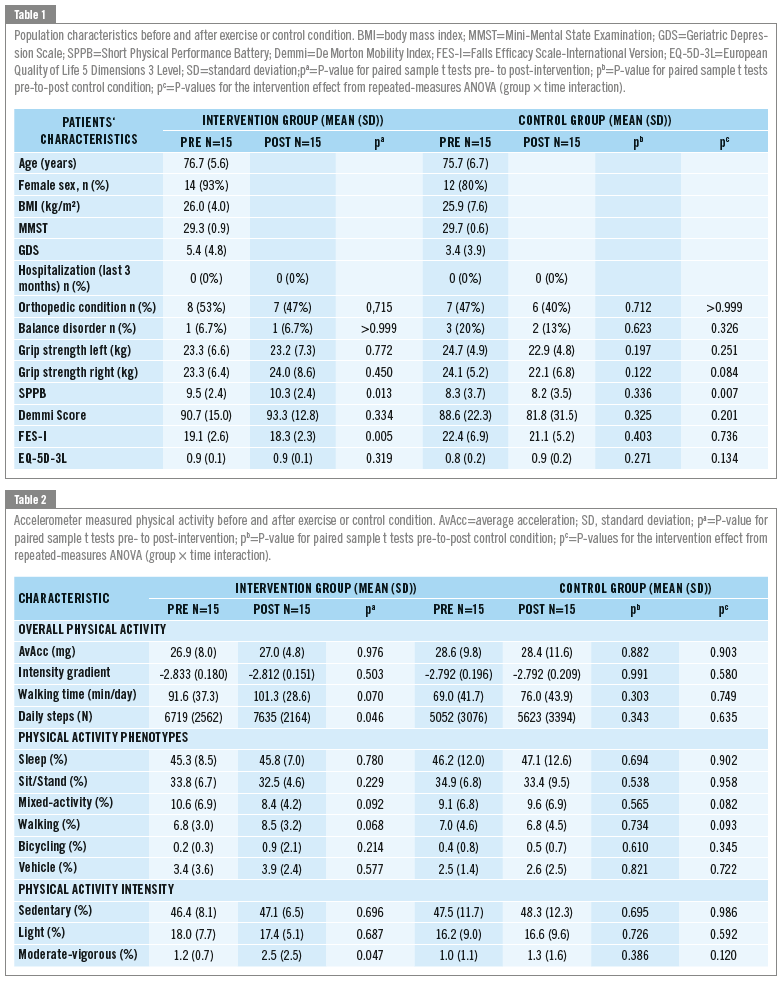
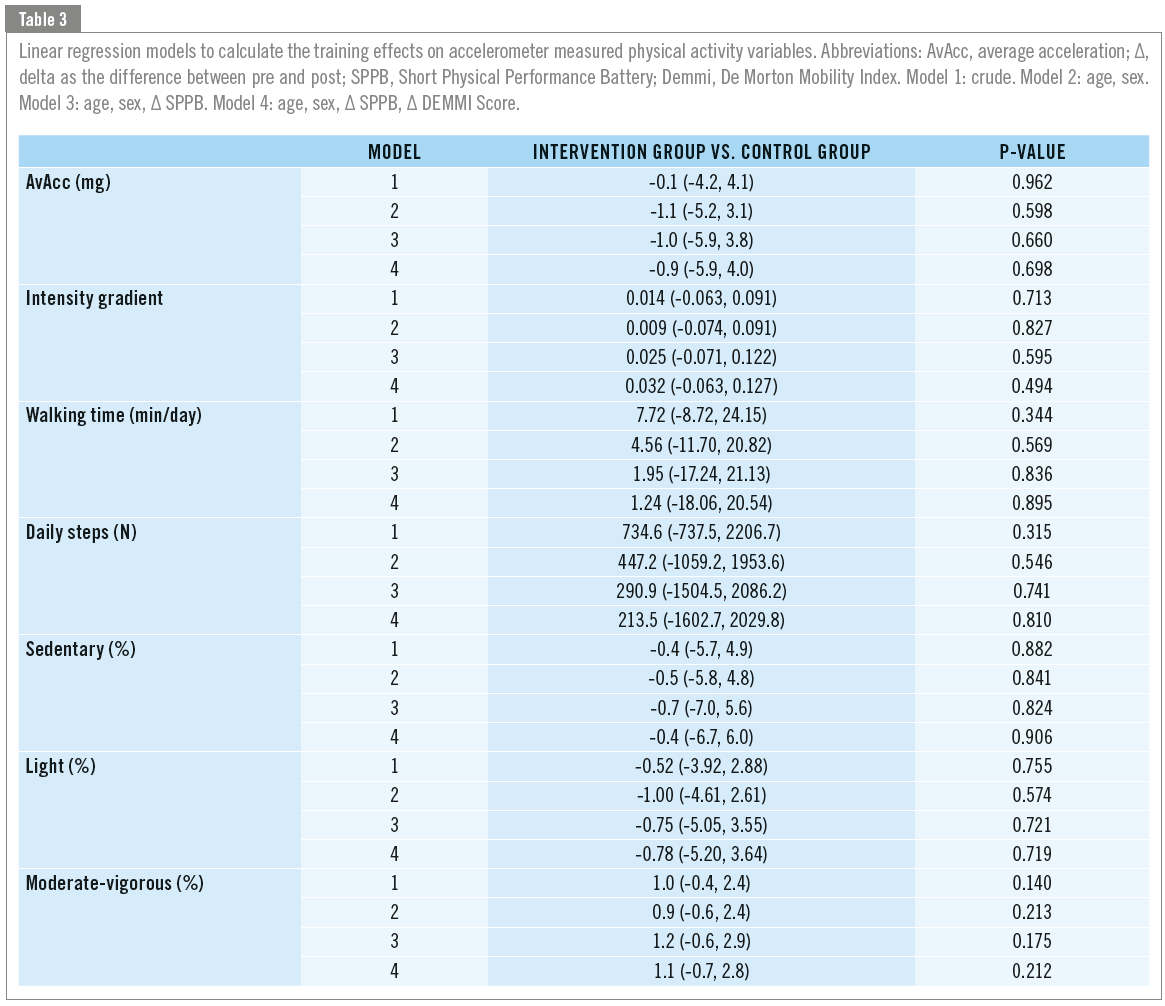
Results: Thirty individuals (15 IG, 15 CG; mean age±SD: 76.2±6.1 years; 87% female) completed the study. There was little evidence for between-group differences in pre-to-post changes for accelerometer-derived outcomes (β (95 % CI)), including daily steps (734.6 (-737.5, 2206.7) p=0.315) and daily walking time in minutes (7.72 (-8.72, 24.15) p=0.344). However, physical function improved significantly (t(26)=2.96, p=0.006) in the IG compared to the CG.
Discussion: A short-term home-based exercise program with weekly telephone coaching did not increase objective PA in community-dwelling older individuals. This lack of effect might be influenced by high sample heterogeneity or unaddressed environmental barriers.
Conclusion: While the intervention failed to increase immediate daily physical activity, it significantly enhanced physical function. These functional gains may serve as a crucial precursor to promote long-term engagement in PA.
Key Words: Gerontology, Accelerometry, Home-Based Exercises, Fall Risk, Fall Prevention
Introduction
With more than 10 million cases per year worldwide, hip fractures represent one of the most serious health events affecting older adults and are among the leading causes of hospitalization in the geriatric population (3, 9, 27). Due to their profound impact on morbidity, premature mortality, independence and quality of life, hip fractures impose a substantial burden not only on affected individuals but also caregivers and healthcare systems (6, 21, 27, 28, 32). Given the increasing life expectancy and the growing proportion of older adults globally, the incidence of hip fractures is expected to nearly double by 2050, further increasing their clinical and socioeconomic relevance (6, 9, 21, 27, 32).
Approximately 95% of hip fractures result from falls and are frequently followed by a substantial decline in physical function (6, 9, 19). Reduced muscle strength, impaired mobility and limitations in activities of daily living (ADL) often compromise independence and increase the risk of recurrent falls and subsequent fractures (1, 6, 19). In addition to physical impairments, cognitive and psychological consequences such as depression and fear of falling may further restrict physical activity (PA) levels, contribute to social isolation and negatively affect long-term recovery (1, 19). Despite rehabilitation efforts, almost half of affected individuals do not regain their pre-fracture functional status within one year after the injury (1, 6, 32). With mortality rates reaching 36% within the first year following a hip fracture, restoring and maintaining physical function is a major clinical priority (6, 19, 32). International guidelines, including the World Health Organization’s Integrated Care for Older People (ICOPE) framework and recommendations from the American Physical Therapy Association (APTA), consistently emphasize the importance of early, individualized and multidisciplinary rehabilitation strategies such as exercise therapy, home-based training and patient education (22, 30). However, increasing healthcare demands, limited resources and barriers such as restricted mobility or limited access to rehabilitation services, particularly in rural areas, highlight the need for alternative approaches that ensure continuous support beyond conventional rehabilitation settings (6, 27).
In this context, telerehabilitation has emerged as a promising strategy to improve accessibility and continuity of care in older adults (10,17,24,28). Previous studies indicate that telerehabilitation approaches are safe, feasible, and may achieve comparable outcomes to conventional physiotherapy in both assessment and intervention (3, 17, 28). Moreover, remote rehabilitation strategies have been associated with improvements in psychological well-being, patient adherence and satisfaction, potentially facilitated by the opportunity to receive treatment within the familiar home environment, while reducing healthcare costs and overcoming transportation-related barriers (3, 17, 24).
Although interest in telerehabilitation has increased substantially in recent years, evidence regarding low-threshold, widely accessible telephone-based interventions specifically designed for older adults remains limited. Preliminary findings from a cohort of middle-aged individuals suggest that approaches such as motivational coaching can support mobility and independence in activities of daily living (10). This is achieved by combining remote accessibility with personalized guidance and maintaining a personal connection (10).
Given that sedentary behavior is associated with an increased risk of fractures, as well as poorer recovery outcomes following hip fractures, this study aimed to investigate whether a low-threshold strategy involving individualized, home-based exercises, combined with telephone coaching, could increase the PA levels of community-dwelling older individuals. We hypothesized that the combination of home-based exercises and telephone coaching would lead to higher levels of PA after the intervention period compared with the control group (CG).
Material and Methods
Study Design and Study Population
The present prospective randomized, controlled intervention study investigated the effects of a low-threshold home-based exercise intervention combined with telephone coaching on PA in community-dwelling older individuals. Participants were randomized into a 12-week exercise intervention training group or a CG receiving general PA recommendations. Recruitment took place from October 2025 to May 2026 via therapeutic facilities in and around Krefeld in Western Germany. Block randomization was performed after the baseline assessments, with five participants in each group, until the final sample size was reached. Appointments took place in the home environment of each participant. This study was approved by the Ethics Committee of the German Sport University Cologne (number: 169/2025) and conducted according to the Helsinki Declaration (31). Oral and written informed consent were obtained from all participants before the study onset.
Inclusion and Exclusion Criteria
The study included older men and women aged ≥70 years, with or without physical limitations, who were living independently at home. Participants were required to have access to a telephone or mobile phone to receive the telephone coaching. Individuals with acute illnesses or conditions, such as heart attack or stroke, limited cognitive function (Mini-Mental State Test <20) (11) or major depressive disorder (Geriatric Depression Scale ≥22) (33) were excluded.
Intervention
The intervention consists of a multidimensional approach, combining an individualized, home-based exercise program with weekly telephone coaching. Both approaches are explained in detail in supplemental material online. In brief, the exercise program was based on the “Vivifrail” project (16). These exercises are designed to be performed daily over a 12-week period, with each session lasting about 30–60 minutes. In addition to the exercise program, participants received weekly telephone coaching. The coaching was guided by principles of motivational interviewing and incorporated behavior change techniques (BCTs) (23). Coaching calls followed a structured discussion guide. The aim of the motivational coaching was to help participants develop the ability to carry out the exercise program independently and to support long-term behavior change in PA. The CG received the WHO guidelines on physical activity (4).
Measurements of Physical Function
All assessments were conducted at baseline and after 12 weeks in the individual home of each participant. All measurements applied in this study are non-invasive. Participants self-reported their current health status and pain level. Maximum handgrip strength of both hands was measured using a digital hand dynamometer (Baseline® BIMS, Fabrication Enterprises Inc., New York, USA). Quality of Life (QoL) was measured using the European Quality of Life 5 Dimensions 3 Level (EQ-5D-3L) (25). The German version of the Falls Efficacy Scale-International (FES-I) was used to measure fall-related self-efficacy (8). The Short Physical Performance Battery (SPPB) was used to assess overall physical function (14). The De Morton Mobility Index (DEMMI) was used to assess the mobility of the participants‘ mobility (7).
Physical Activity Assessments
PA was objectively measured using the Matrix 003 Activity Monitor (Parmaysalud, Madrid, Spain). Participants wore the device on their non-dominant wrist, 24 hours per day for 7 consecutive days. Monitoring was initiated after the baseline assessment. Sampling frequency was set to 100 Hz and the accelerometer was set to a ±16 gravity (g) range. Raw data files (.csv format) were processed in R (R Foundation for Statistical Computing, Vienna, Austria) using the ‘GGIR’ R package version 3.3.4 (29). The supplement material online provides an extensive explanation of raw data processing procedures.
Statistical Methods and Sample Size Calculation
Statistical analyses were performed with an intention to treat approach using R version 4.4.3 (R Foundation for Statistical Computing, Vienna, Austria). Sample characteristics were described using means and standard deviations. Paired sample t-tests were performed to analyze changes within each group from pre- to post-intervention. To analyze potential intervention effects, a 2×2 mixed-design ANOVA was used to analyze between-group differences in changes over time. In addition, fitted models adjusted for age, sex, changes in SPPB and changes in DEMMI score were analyzed. All statistical tests were two-sided and used a significance level of 0.05. The sample size calculation is included in the supplement material online.
Results
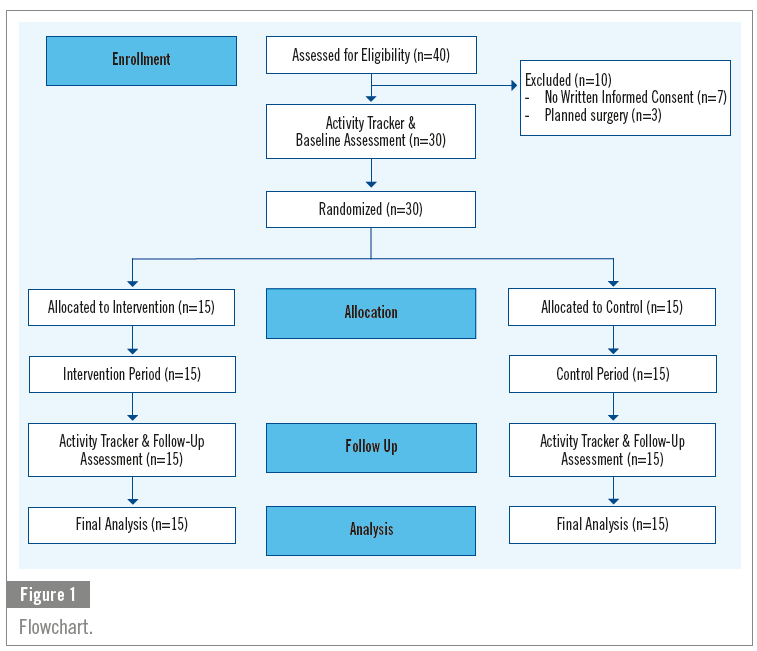
A total of 15 individuals in the IG and 15 individuals in the CG were included in the final analysis (figure 1).
The intervention lead to greater improvement in SPPB and FES-I scores in IG compared to CG (table 1). However, there was little evidence of an effect of the intervention on PA measures (table 2). Within-group analyses showed increases in daily steps and moderate to vigorous PA levels in IG but not CG (table 2).
Additionally, the fitted adjusted models revealed little evidence for differences between the IG and CG when comparing accelerometer-based measurements over time (table 3). The detailed results of the accelerometer-based PA data are described in supplemental tables 1-6 online.
Discussion
This randomized controlled trial examined the effects of an individualized low-threshold home-based exercise program combined with telephone coaching using established BCTs on PA among community-dwelling older individuals.
Although accelerometer-derived PA did not differ significantly between groups, the IG showed clinically meaningful improvements in physical function, as evidenced by increased SPPB scores. While the IG did show improvements in daily steps and moderate-to-vigorous PA levels, these differences did not reach statistical significance when compared to the CG.
This lack of statistically significant PA effects may be partly attributed to the inherent challenges of assessing PA in older populations. As Brach et al. recently highlighted, several confounding factors must be considered when interpreting PA data in older adults (2). In particular, high intra-individual heterogeneity can easily mask potential intervention effects. In our study, the sample size calculation was based on a cohort with a mean age of 42 years. Even though we assumed a conservative effect size, we did not account for the substantially higher heterogeneity in our older sample compared to that of Fischer et al. Future trials must therefore factor this greater intra-individual variability into their power calculations (10). Additionally, environmental barriers, such as stairs, inadequate walkways, or poor public transportation, were not addressed by our home-based program. These factors may have continued to restrict participants‘ outdoor PA, even after their physical capacity had improved.
In contrast to the PA outcomes, physical function, measured via the SPPB, showed significant intervention effects. These findings align with previous research demonstrating that individualized exercise regimens enhance physical function in older adults. Similar functional gains have been documented for the „Vivifrail“ program across various populations, supporting its efficacy in maintaining or restoring functional capacity even without supplementary telephone coaching (5, 18, 26). For instance, Casas-Herrero et al. reported a 1.41-point SPPB improvement after a three-month “Vivifrail” intervention in a significantly older cohort (mean age: 84 years) (5), while Li et al. observed a 1.03-point increase after 12 weeks (18). Our study yielded an SPPB improvement of 0.8 points in the IG. However, our participants had higher baseline functional scores than those in previous trials, suggesting they were starting from a higher level of fitness. This likely explains the slightly more moderate functional adaptations observed here.
Given the discrepancy between improved physical function and unchanged PA levels, we hypothesize that in this specific cohort, functional improvements may occur as a necessary precursor before tangible changes in habitual, daily PA can be observed.
Beyond the clinical benefits, low-threshold PA interventions are also of particular relevance from a health-economic perspective given the substantial healthcare costs associated with physical inactivity in older individuals. Findings from the NAKO study indicate that insufficiently active adults aged 60 years and older generate considerably higher healthcare costs per year than their physically active counterparts, with the difference increasing further when indirect costs are considered (13).
Accordingly, low-threshold, cost-efficient interventions are becoming increasingly relevant. Previous health-economic studies suggest that telephone-based coaching can achieve comparable health outcomes at lower costs than conventional face-to-face rehabilitation by reducing transportation requirements and in-person visits (20). In addition, telephone-based approaches require only minimal technical skills, making them particularly accessible for older individuals. Furthermore, they may improve access to rehabilitation, especially for individuals with limited mobility or for those living in rural or underserved areas. In the long-term, they may also help expand treatment capacity by enabling appropriately trained non-physiotherapeutic staff to provide coaching interventions.
Several limitations should be considered when interpreting the findings of this pilot trail. First of all, participants were community-dwelling older adults with relatively high functional capacity at baseline. This may have limited the potential for further improvement. Comparable interventions may therefore yield larger effects in frailer populations such as patients after hip fracture. Second, the small sample size and predominance of female participants limit the statistical power and generalizability of the findings, particularly to older men. Furthermore, the effectiveness of the telephone coaching may have been influenced by the coaches’ limited practical experience with motivational interviewing. Although all coaches received structured training, motivational interviewing is a complex communication technique that requires extensive practical experience for optimal implementation (12). Moreover, PA was objectively measured using accelerometry. While the objective assessment eliminated self-report bias and therefore represents a strength of this study, the accuracy of wrist-worn accelerometers may vary between devices. Höchsmann et al. demonstrated systematic differences in recorded step counts across different devices despite identical wearing positions (15). Finally, due to the nature of the intervention, neither the participants nor the examiners could be fully blinded.
In summary, future research should evaluate whether longer intervention and follow-up periods translate functional improvements into long-term increases in everyday PA. Additionally, the effectiveness of this approach should be investigated in more vulnerable populations including frail older adults and patients after hip fracture. Finally, further health-economic evaluations are required to determine the cost-effectiveness and feasibility of implementing telephone-based coaching within routine clinical practice.
Conflict of Interest
The authors have no conflict of interest.
Funding
This study was supported by internal funding from the University of Applied Sciences Niederrhein (to LS).
Ethical Approval and Informed Consent
This study was approved by the Ethics Committee of the German Sport University Cologne (number: 169/2025). Oral and written informed consent were obtained from all participants before the study onset.
Data Availability
Study data are available from corresponding author on reasonable request. AI was not used for scientific content.
Author Contributions / Statement of Author Contributions
All authors have completed the ICMJE Uniform Disclosure Form at www.icmje.org/coi_disclosure.pdf and declare: no support from any organization for the submitted work (instead of the declared internal funding).
Summary Box
This randomized controlled trial demonstrated that an individualized, home-based exercise program involving telephone coaching improved physical function in older adults, despite there being no statistically significant difference in physical activity (PA) levels compared to the control group. The lack of significant PA effects may be explained by the high degree of heterogeneity within older populations and unaddressed environmental barriers. It is also notable that, since the participants started with higher baseline fitness than cohorts in previous “Vivifrail” studies, their functional gains were slightly more moderate. These findings suggest that a home-based exercise intervention combined with telephone coaching can improve physical function in the short term. Further research is needed to establish whether long-term PA improvements are a consequence of higher physical function in older adults.
References
- Fear of Fallingafter Hip Fracture: Prevalence, Course, and Relationship withOne-Year Functional Recovery. Am J Geriatr Psychiatry. 2016; 24:1228–1236.
- Evidence-based yet stillchallenging! Research on physical activity in old age. Eur RevAging Phys Act. 2023; 20:
- Telerehabilitation: ASolution for Patients After Hip Fracture? Transl Med UniSa.2024; 26: 30–37.
- World Health Organization2020 guidelines on physical activity and sedentarybehaviour. Br J Sports Med. 2020; 54: 1451-1462.
- Effects ofVivifrail multicomponent intervention on functional capacity: amulticentre, randomized controlled trial. J Cachexia SarcopeniaMuscle. 2022; 13: 884-893.
- Loss of skeletal muscle mass can bepredicted by sarcopenia and reflects poor functional recovery atone year after surgery for geriatric hip fractures. Injury. 2021; 52:3446-3452.
- The de Morton Mobility Index(DEMMI): An essential health index for an ageing world. HealthQual Life Outcomes. 2008; 6.
- Die Deutsche Version der FallsEfficacy Scale-International Version (FES-I). Z Gerontol Geriatr.2006; 39: 297–300.
- A critical review of the long-termdisability outcomes following hip fracture. BMC Geriatr. 2016;16.
- Telephone-Based Coachingand Prompting for Physical Activity: Short- and Long-TermFindings of a Randomized Controlled Trial (Movingcall). Int JEnviron Res Public Health. 2019. doi:10.3390/ijerph16142626
- „Mini-mental state“. A practicalmethod for grading the cognitive state of patients for theclinician. J Psychiatr Res. 1975; 12: 189–198.
- Assessing competence in healthprofessionals‘ use of motivational interviewing: A systematicreview of training and supervision tools. Patient Educ Couns.2020; 103: 473–483.
- Costs associated withinsufficient physical activity in Germany: cross-sectional resultsfrom the baseline examination of the German national cohort(NAKO). Eur J Health Econ. 2025; 26.
- A Short PhysicalPerformance Battery Assessing Lower Extremity Function:Association With Self-Reported Disability and Prediction ofMortality and Nursing Home Admission. J Gerontol. 1994; 49:M85–M94.
- Validity ofsmartphones and activity trackers to measure steps in a freelivingsetting over three consecutive days. Physiol Meas. 2020; 41.
- Editorial: What IsNew in Exercise Regimes for Frail Older People - How Does theErasmus Vivifrail Project Take Us Forward?. J Nutr Health Aging.2016; 20: 736-737.
- Telerehabilitation in PhysicalTherapist Practice: A Clinical Practice Guideline From theAmerican Physical Therapy Association. Phys Ther. 2024; 104.doi:10.1093/ptj/pzae045
- Effects of the Vivifrail-B multicomponentexercise program based on society ecosystems theory onphysical function in community-dwelling frail older adults: Arandomized controlled trial. Exp Gerontol. 2025.
- Recovery from hip fracturein eight areas of function. J Gerontol A Biol Sci Med Sci. 2000; 55:M498–M507.
- The HealthEconomic Impact of Musculoskeletal Physiotherapy Deliveredby Telehealth: A Systematic Review. Int J Telerehabil. 2022; 14.doi:10.5195/ijt.2023.6524
- Hip fracture epidemiological trends, outcomes, and riskfactors, 1970–2009. Int J Gen Med. 2010; 3: 1-17.
- Physical TherapyManagement of Older Adults With Hip Fracture. J Orthop SportsPhys Ther. 2021; 51: CPG1–CPG81.
- The behavior changetechnique taxonomy (v1) of 93 hierarchically clusteredtechniques: building an international consensus for thereporting of behavior change interventions. Ann Behav Med.2013; 46: 81–95.
- Effectiveness and cost-effectiveness of telerehabilitation formusculoskeletal disorders: A systematic review and metaanalysis.Ann Phys Rehabil Med. 2024; 67.
- EQ-5D: a measure of health statusfrom the EuroQol Group. Ann Med. 2001; 33: 337–343.
- Effectsof a 12-week Vivifrail exercise program on intrinsic capacityamong frail cognitively impaired community-dwelling olderadults: secondary analysis of a multicentre randomised clinicaltrial. Age Ageing. 2022; 51.
- Global Epidemiology of HipFractures: Secular Trends in Incidence Rate, Post-FractureTreatment, and All-Cause Mortality. J Bone Miner Res. 2023; 38:1064-1075.
- Efficacy of telerehabilitationfor patients after hip fracture surgery: A systematic reviewand meta-analysis. J Telemed Telecare. 2025; 31: 174-183.
- GGIR. Version 3.3-4. Zenodo; 2026.
- Integrated care for older people(ICOPE): guidance for person-centred assessment and pathwaysin primary care. 2024. Accessed 10.07.2026.
- World Medical Association Declarationof Helsinki: ethical principles for medical research involvinghuman subjects. JAMA. 2013; 310: 2191–2194.
- Global, regional, and nationalburden of bone fractures in 204 countries and territories,1990–2019: a systematic analysis from the Global Burden ofDisease Study 2019. Lancet Healthy Longev. 2021; 2: e580–e592.
- Development and validationof a geriatric depression screening scale: a preliminary report. JPsychiatr Res. 1982; 17: 37-49.
University of Applied Sciences Niederrhein
Faculty of Health Care,
Reinarzstr. 49
47805 Krefeld, Germany
lukas.streese@hs-niederrhein.de