


Healthy Ageing: Measuring and Maintaining Functional Ability
Gesundes Altern: Messen und Erhalten funktionaler Fähigkeit
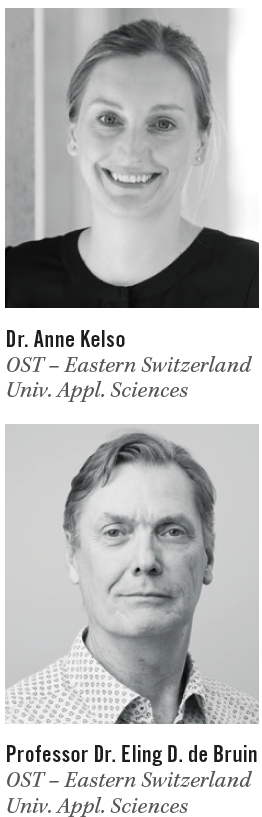
Healthy ageing is defined by the World Health Organization as “the process of developing and maintaining the functional ability that enables well-being in older age” (9, 10). This definition, which underpins the UN Decade of Healthy Ageing (2021-2030), shifts the focus from the absence of disease to what people can be and do as they grow older. Functional ability reflects an individual’s intrinsic capacity, the environment, and the interaction between them. Maintaining or improving functional ability is therefore a central challenge for clinicians, researchers and practitioners in exercise and rehabilitation.
Frailty is a major threat to functional ability and becomes more common with age. Low physical activity is a defining component of the frailty phenotype (5) and an important modifiable target, while chronic disease and persistent pain are also associated with frailty (5, 8). Across population-based studies of adults aged 50 years and older, the pooled prevalence of physical frailty was 12%, while 46% were classified as pre-frail; estimates varied substantially by assessment method and population (7).
Frailty reflects reduced physiological reserve and increased vulnerability to relatively minor stressors because of cumulative decline across multiple physiological systems (3). Importantly, frailty is dynamic rather than inevitable. Physical activity and exercise can improve functional capacity, but the appropriate dose needs to be individualised, particularly in people with frailty (4). Functional capacity is modifiable well into older age.
Assessing and Improving Functional Ability and Physical Activity
Supporting functional ability requires both effective intervention and an accurate understanding of how people move and function in daily life. Wearable technologies can complement clinical assessment by capturing selected behavioural and physiological parameters longitudinally outside clinical settings (1). Tanner et al. (this issue) illustrate this in residential care facilities, where accelerometry combined with standardised performance tests showed that 2-minute walking test performance had the strongest association with both light and moderate physical activity in an older population with substantial comorbidity and high sedentary time. Such monitoring can inform the design but also the evaluation of interventions aiming to influence physical activity behaviour. Streese et al. (this issue) report that a home-based exercise programme with telephone coaching for older adults improved physical function despite no corresponding increase in physical activity, suggesting that gains in functional capacity do not necessarily translate immediately into greater daily activity.
Digital Support Tools and Advancing Assessment Approaches
Digital health interventions are increasingly being explored to support healthy ageing. This interest comes against a backdrop of increasing pressure on health care systems, including projected workforce shortages (2). Eberle et al. (this issue) propose a digital platform combining nutrition, learning, exercise and social participation as a prevention-focused approach alongside disease-oriented digital health applications. Whether such a platform can change health-related behaviour remains to be demonstrated. Wearable technologies may complement episodic clinical assessment by providing longitudinal information on mobility and other behavioural and physiological changes in real-world settings (1). Beyond monitoring function over time, however, understanding age-related decline also requires more detailed assessment of its underlying mechanisms. In the context of sarcopenia, Gennaro et al. (this issue) propose reframing sarcopenia partly as a disorder of brain-muscle communication. They integrate corticospinal connectivity, motor-unit behaviour and muscle synergies into a multimodal framework and argue that dynamic and ecologically valid tasks may better capture neural contributions to muscle weakness. The framework remains hypothesis-generating and requires validation.
Pathways towards Healthy Ageing
Together, these contributions illustrate that healthy ageing requires a continuum of assessment, targeted intervention and sustained support rather than a single solution. They span the identification of functional limitations, exercise-based approaches to improve functional capacity, prevention-oriented digital support and a refined assessment of age-related neuromuscular decline.
The common agenda is therefore not more technology, but better matched assessment, technology and intervention. Researchers and clinicians need to determine which approaches are appropriate, for whom, under what conditions, and with what level of support. A device or digital intervention suitable
for a physically and cognitively fit 65-year-old may not be suitable for a frail 85-year-old living in residential care. Intervention type and dose should be tailored to baseline capacity rather than applying a one-size-fits-all approach. Functional gains can occur without parallel increases in daily activity. Whether functional gains translate into sustained increases in daily physical activity may depend on longer follow-up and continued behavioural and environmental support. Digital platforms could provide one form of such support, but sustained engagement with these platforms and their effectiveness remain to be established. Novel assessment tools also require validation against clinically meaningful outcomes and established assessments before they inform routine practice.
Healthy Ageing: From Policy to Practice
These advances require policy support, but implementation should follow evidence. A long-observed consequence of the global epidemiologic shift is, for example, the rise in non-communicable diseases that lead to sizeable increases in disability-adjusted life-years (6). This rising burden necessitates intensified efforts to mitigate exposure to leading risk factors and should include policies that, amongst others, promote physical activity (6). Healthcare systems should invest in the research and infrastructure needed to evaluate exercise-based prevention, digital platforms and longitudinal functional monitoring at scale. Likewise, reimbursement pathways should prioritise approaches that demonstrate effectiveness, clinical utility, accessibility and cost-effectiveness. Where effectiveness and utility are demonstrated, exercise-based frailty prevention and validated functional monitoring should be integrated across community, primary care, and long-term care settings, helping to translate healthy ageing from a policy goal into everyday practice.
Ultimately, healthy ageing is not defined by the absence of disease, but by preserving the ability to remain active, independent and engaged in later life. The contributions in this issue highlight complementary approaches towards this goal: identifying functional limitations, improving physical capacity, supporting health-oriented behaviour and refining the assessment of age-related decline. Their common message is that effective strategies must consider the individual, be feasible in everyday life, and, above all, be supported by evidence.
Literatur
- From frailty-driven tofrailty-informed care in the age of wearable AI. Commun Med(Lond). 2026; 6: 452.
- The global health workforcestock and distribution in 2020 and 2030: a threat to equity and‚universal‘ health coverage? BMJ Glob Health. 2022; 7: e009316.
- Frailty in elderly people. Lancet.2013; 381: 752-762.
- Physical activity inolder patients: Push your performance capacity to prevent andlimit frailty! Eur J Intern Med. Published online June 4, 2026.
- Frailty in older adults:evidence for a phenotype. J Gerontol A Biol Sci Med Sci. 2001; 56:M146-M156.
- Burdenof 375 diseases and injuries, risk-attributable burden of 88risk factors, and healthy life expectancy in 204 countries andterritories, including 660 subnational locations, 1990-2023: asystematic analysis for the Global Burden of Disease Study 2023.Lancet. 2025; 406: 1873-1922.
- Prevalence of frailty in62 countries across the world: a systematic review and metaanalysisof population-level studies. Age Ageing. 2021; 50: 96-104.
- Persistent pain is a riskfactor for frailty: a systematic review and meta-analysis fromprospective longitudinal studies. Age Ageing. 2018; 47: 785-793.
- World report on ageing and health.Geneva: World Health Organization; 2015.
- Healthy Ageing and Functional Ability.Geneva: World Health Organization; 2020. [accessed September14, 2026] www.who.int/news-room/questions-and-answers/item/healthy-ageing-and-functional-ability
OST-Eastern Switzerland University of
Applied Sciences, Department of Health,
Institute of Health Sciences
Rosenbergstrasse 59, 9001 St.Gallen
Switzerland
E-Mail: eling.debruin@ost.ch