


Effectiveness of Physiotherapy Interventions on Foot Posture and Balance in Athletes: A Systematic Review
Wirksamkeit physiotherapeutischer Interventionen auf Fußhaltung und Balance bei Athleten: Eine systematische Übersichtsarbeit
Summary
Background: Foot posture and balance are critical for athletic performance and injury prevention, providing stability, support, and shock absorption. Abnormal foot alignments, such as excessive pronation or supination, disrupt biomechanics and neuromuscular control, increasing lower limb injury risk. Physiotherapy interventions, including intrinsic muscle strengthening, proprioceptive training, and orthotic support, show potential in improving foot alignment and postural stability.
Objective: This systematic review critically evaluates the efficacy of physiotherapy interventions in enhancing foot posture and balance among athletes.
Methods: A systematic search was conducted across PubMed, Scopus, PEDro, Cochrane Library, Semantic Scholar and EBSCO databases for studies published between January 2014 and March 2025 (PROSPERO ID: CRD42024627239). Quality assessment utilized Joanna Briggs Institute (JBI) tools, and certainty of evidence was appraised using a GRADE-style framework.
Results: Of 975 records identified, 18 studies (10 RCTs, 8 quasi-experimental) met inclusion criteria. Five studies demonstrated low risk of bias, six low-to-moderate, six moderate, and one moderate-to-high risk. Corrective exercises, short foot exercises, neuromuscular taping, and myofascial release produced significant improvements in foot posture index, navicular drop height, and static and dynamic balance. Overall certainty of evidence was low to moderate, reflecting heterogeneity, small sample sizes, and limited long-term follow-up.
Conclusion: The available evidence suggests that targeted physiotherapy interventions particularly short-foot exercises, balance and proprioceptive training, corrective exercises and selected taping or myofascial techniques can improve foot posture and balance in athletes in the short term. Given protocol heterogeneity and limited long-term data, findings remain supportive rather than definitive, warranting cautious sport-specific application.
Key Words: Short Foot Exercises, Intrinsic Foot Muscles, Foot Posture Index, Proprioceptive Training, Athletic Injury Prevention
Introduction
The foot, being the terminal segment of the lower limb, serves as a dynamic structure capable of adjusting to mechanical loads by functioning as either a shock absorber or a rigid lever. Its anatomical position and versatility make it essential for weight-bearing, efficient force distribution, locomotion, balance, and coordinated body movement (37). Smooth foot movement particularly subtalar pronation and supination is essential for effective function. When the foot first contacts the ground, it naturally moves into pronation, reaching peak pronation during midstance; this unlocks the midtarsal joint and allows the foot to accommodate uneven surfaces and assist with balance. In a healthy foot, the transition between pronation and supination is seamless, maintaining an appropriate balance between flexibility and stability across tasks. Malalignment can disrupt this natural mobility and may compromise lower-limb function during weight-bearing activities (21, 36) . Functional foot stability is defined as “the ability of the foot to continually adjust its position to maintain the body in an upright, balanced position“ (20) . An individual with good functional foot stability can continuously regulate foot-ground interaction, reducing unnecessary or excessive movements that may predispose to injury. Because the foot forms the foundation of the lower kinetic chain, inadequate management of foot or ankle injuries can propagate dysfunction proximally (4, 20).
Balance is widely regarded as a key indicator of lower-limb function. It is defined as the ability to maintain the body’s centre of gravity over the base of support, preventing loss of stability or falls (30). Upright postural control depends on continuous integration of visual, vestibular and somatosensory input by the central nervous system, which together keep the centre of gravity appropriately aligned over the feet (8).Static balance refers to the capacity to remain steady on one or both legs with minimal movement, whereas dynamic balance describes stability during active movement or task performance. Balance training is now a recognised component of sports performance programming, fall-prevention strategies for older adults, and rehabilitation after lower-limb injury (2,19).
Among the modifiable risk factors for athletic injury, foot posture and balance have received sustained research attention (5). Sport imposes high repetitive loads on the foot and ankle, so appropriate foot alignment and balance are essential for performance and injury avoidance. Excessive overpronation or supination during standing can disturb lower-limb alignment and increase susceptibility to plantar fasciitis, medial tibial stress syndrome and patellofemoral pain. The Foot Posture Index (FPI-6) is a validated clinical tool used to classify foot posture as pronated, neutral or supinated (16). Runners classified at either extreme of the FPI-6 scale have been shown to carry a higher risk of running-related injury (3). Athletes with pronated feet often demonstrate reduced ankle dorsiflexion range and diminished calf strength, and targeted training that addresses these deficits has been advocated to improve performance and lower injury risk (3, 24). Short Foot Exercise (SFE), which activates the intrinsic plantar muscles, has emerged as a widely used approach; SFE programmes have been associated with improved medial longitudinal arch support and better foot alignment and balance, particularly in runners and individuals with flexible flat foot, and are now considered a central component of rehabilitation for athletes with altered foot posture (10, 24).
Emerging evidence suggests that strengthening proximal muscles such as the gluteus medius provides additive benefit for athletes with overpronation. Athletes who combined gluteus medius training with SFE demonstrated greater improvements in navicular drop, FPI-6 score and single-leg stance performance than athletes who trained gluteus maximus alone or received no intervention (25). These findings underline the functional coupling between hip and foot neuromuscular control, and support a kinetic-chain approach to rehabilitation. While adjunctive interventions such as custom orthoses and minimalist footwear have also been investigated, the preponderance of current evidence points to exercise therapy in particular SFE combined with balance training and proximal strengthening as the most effective strategy for improving foot posture, balance and sport-related motor skill (32).
Despite these encouraging findings, the literature is marked by small sample sizes, heterogeneous protocols, inconsistent outcome measurement and limited long-term follow-up, which constrain the strength of available inferences and have not been synthesised in a single contemporary review focused specifically on athletes.
The aim of this systematic review is to evaluate the effectiveness of physiotherapy interventions including short foot exercises, balance and proprioceptive training, corrective exercise programmes, hip strengthening, taping and myofascial techniques on foot posture and balance in athletes. A secondary aim is to appraise the methodological quality and certainty of the underlying evidence, and to examine the implications of the findings for injury prevention and athletic performance.
Methodology
Literature Search
The review was conducted in accordance with the Preferred Reporting Items for Systematic Reviews and Meta-Analyses (PRISMA) 2020 guidelines and prospectively registered with PROSPERO (CRD42024627239). Six bibliographic databases PubMed, Scopus, PEDro (Physiotherapy Evidence Database), Cochrane Central Register of Controlled Trials, Semantic Scholar and EBSCO were searched from 1 January 2014 to 31 March 2025. Searches were limited to records published in English; no filter was applied for study design at the database level in order to preserve sensitivity. Reference lists of included studies and of relevant reviews were hand-searched to identify additional eligible records.
Eligibility Criteria
Inclusion criteria were developed using the PICO framework. (1) Study design: randomised controlled trials (RCTs) and non-randomised controlled trials / quasi-experimental studies with a comparator or pre-post design. (2) Population: competitive, sub-elite or recreational athletes of either sex aged 18-30 years, engaged in regular sport-specific training. (3) Intervention: any physiotherapy intervention targeting foot posture or balance, including exercise therapy (short foot exercises, intrinsic foot muscle training, proprioceptive and balance training, hip/core strengthening, corrective exercises), manual therapy (myofascial release, joint mobilisation), taping (rigid, kinesiology, dynamic), and adjunctive modalities such as electrotherapy or thermal therapy. These intervention categories were pre-specified because each has a plausible mechanism by which it can influence foot alignment or postural control: exercise therapy modifies active arch support and neuromuscular activation; taping provides short-term passive realignment and cutaneous afferent input; manual therapy alters tissue mobility and proprioceptive signalling; and electrotherapy/thermotherapy can be used as adjuncts to modulate pain or facilitate active training. (4) Comparator: usual care, placebo, sham intervention, alternative physiotherapy or no intervention. (5) Outcomes: at least one objective measure of foot posture (e.g. Foot Posture Index-6, navicular drop, medial longitudinal arch angle, arch rigidity index) and/or balance (e.g. Y-Balance Test, Star Excursion Balance Test, Balance Error Scoring System, single-leg stance, force-platform sway). Exclusion criteria were case reports, case series, conference abstracts without full-text, duplicate publications, grey literature, and studies in clinical populations without an athletic component.
Search Strategy
The search strategy was developed iteratively by two reviewers and piloted against a set of known eligible references to maximise sensitivity. The final search string combined population, intervention and outcome concepts using Medical Subject Headings (MeSH) where available and free-text terms, linked with Boolean operators. The generic search string, adapted to the syntax of each database, was: („athlete*“ OR „sports player*“ OR „sportsman“ OR „sportswoman“ OR „runner*“ OR „football*“ OR „soccer“ OR „basketball player*“ OR „volleyball player*“ OR „karate“ OR „Kho Kho“ OR „hockey“) AND („physiotherapy“ OR „physical therapy“ OR „exercise therapy“ OR „short foot exercise*“ OR „intrinsic foot muscle*“ OR „corrective exercise*“ OR „balance training“ OR „proprioceptive training“ OR „neuromuscular training“ OR „taping“ OR „kinesiology taping“ OR „myofascial release“ OR „manual therapy“ OR „electrotherapy“ OR „thermotherapy“) AND („foot posture“ OR „foot posture index“ OR „FPI-6“ OR „navicular drop“ OR „medial longitudinal arch“ OR „pronation“ OR „supination“ OR „flat foot“ OR „balance“ OR „postural control“ OR „static balance“ OR „dynamic balance“ OR „Y-balance test“ OR „Star Excursion Balance Test“ OR „SEBT“).
Filters applied were: publication date 2014-2025, English language, and human studies. No methodological filter was applied at the search stage. Records retrieved from all databases were exported into Rayyan for deduplication and screening. Titles and abstracts were screened independently by two reviewers against the eligibility criteria; full texts of potentially relevant records were then retrieved and assessed. Disagreements at either stage were resolved by discussion, with a third reviewer adjudicating unresolved cases.
Data Extraction
A standardised data-extraction form was used to record, for each included study: author and year, country, study design, sample size, participant characteristics (age, sex, sport discipline, competitive level), intervention description (type, frequency, session duration, total duration, supervision), comparator, outcome measures and time points, key results with effect magnitudes where reported, and any adverse events or adherence data. Safety information (adverse events, exclusion criteria and any protocol modifications) and feasibility information (recruitment, attendance, retention and adherence) were also extracted. Data extraction was performed by one reviewer and verified by a second; discrepancies were resolved by discussion.
Quality Assessment
Methodological quality and risk of bias were appraised using the Joanna Briggs Institute (JBI) Critical Appraisal tools, applying the 13-item checklist for RCTs and the 9-item checklist for quasi-experimental studies. Each item was rated as Yes (Y), No (N), Unclear (U) or Not Applicable (NA). A study with a higher proportion of „Yes“ responses was considered to have stronger methodological quality. Two reviewers independently appraised each study; disagreements were resolved by discussion.
Certainty of Evidence
Because a formal meta-analysis was not feasible, certainty of evidence for the two prioritised outcomes foot posture (FPI-6 / navicular drop) and balance (SEBT / Y-Balance Test) was appraised narratively using a GRADE-informed framework. Five domains were considered: risk of bias across contributing studies, inconsistency of findings, indirectness (with respect to population, intervention and outcome), imprecision (small samples, wide confidence intervals), and suspected publication bias. Certainty was downgraded one or two levels from the starting position (high for RCT-dominated evidence, low for observational/quasi-experimental evidence) in line with standard GRADE logic, and the resulting rating was used to frame the strength of conclusions. Formal GRADE summary-of-findings tables were not generated because most contributing studies did not report effect sizes with confidence intervals in a manner suitable for pooled presentation.
Data Synthesis and Heterogeneity Assessment
Included studies were grouped by intervention type (short foot exercise and intrinsic foot muscle training; taping; manual therapy / myofascial release; multimodal corrective exercise; balance and proprioceptive training; sport-specific or adjunctive training) and by outcome domain (foot posture measures; static balance; dynamic balance; sport-performance measures). Heterogeneity was assessed qualitatively across four axes: (i) clinical heterogeneity : differences in sport discipline (running, football/soccer, basketball, volleyball, karate, ice hockey, Kho Kho, general athletic populations), competitive level, foot-posture status (flat foot, overpronation, hypomobility, mixed) and age range; (ii) intervention heterogeneity : differences in exercise type, dose (frequency 2-5 sessions/week, duration 4-12 weeks, session length 15-60 min), supervision (clinic-based, field-based, home-based) and comparator (sham, no intervention, alternative exercise, placebo taping); (iii) methodological heterogeneity : differences in design (RCT vs quasi-experimental), blinding, allocation concealment and analysis; and (iv) outcome heterogeneity : differences in measurement tools (FPI-6, navicular drop, arch rigidity index; SEBT, Y-Balance Test, BESS, single-leg stance, force platform) and in reporting format (mean change, raw post-values, effect sizes). Because the substantial variability across these axes precluded meaningful statistical pooling, a structured descriptive synthesis was used. Where studies reported effect sizes (Cohen’s d), these were extracted and are reported in the narrative synthesis to aid interpretation of clinical magnitude.
Results
Study Selection
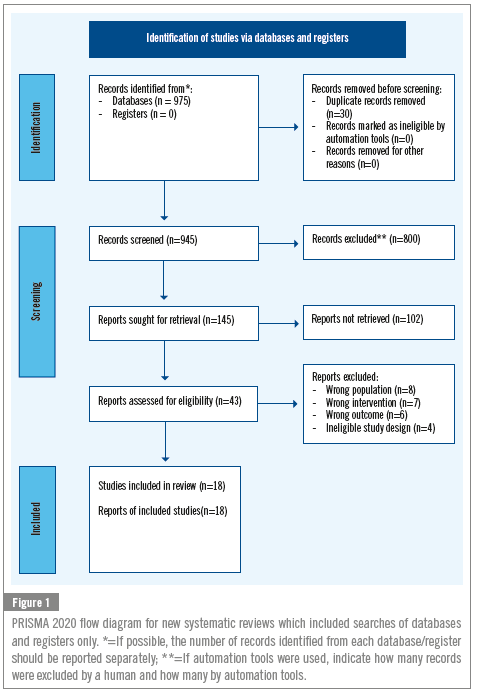
A total of 975 records were identified through database searching (PubMed n=231; Scopus n=214; PEDro n=92; Cochrane n=108; Semantic Scholar n=187; EBSCO n=143). After removal of 30 duplicate records, 945 records were screened at title and abstract. Of these, 800 records were excluded as not meeting the eligibility criteria (predominantly non-athletic populations, unrelated outcomes, or non-physiotherapy interventions). The remaining 145 reports were sought for retrieval; 102 full texts could not be retrieved after multiple attempts through institutional access, interlibrary loan and direct author contact, and were excluded at this stage. Forty-three full-text reports were assessed for eligibility. Of these, 25 were excluded with reasons: wrong population (n=8), wrong intervention (n=7), outcome not related to foot posture or balance (n=6), and ineligible study design, including case reports and conference abstracts (n=4). Eighteen studies were included in the final qualitative synthesis (10 RCTs and 8 quasi-experimental studies). The flow of records is summarised in the PRISMA flow diagram (figure 1).
Participants’ Characteristics
The 18 included studies enrolled a combined total of approximately 703 athletic participants across studies. Sample sizes per study ranged from 23 to 118, with a median of 29 participants. Reported mean age of participants across studies spanned 18 to approximately 30 years, consistent with the review’s eligibility range, with most studies concentrated in the 20-25-year band. Twelve studies recruited mixed-sex cohorts, four studies recruited male athletes only (22, 27, 37) and two studies recruited female athletes only (6, 14).
Sport disciplines represented were diverse: distance and recreational running (n=5 studies), football/soccer (n=2), basketball (n=1), volleyball (n=1), karate (n=1), kho kho (n=1), ice hockey (n=1), badminton (n=1), and mixed or unspecified athletic cohorts including NCAA Division III athletes and elite university athletes (n=5). Foot-posture status at baseline varied across studies: eight studies explicitly recruited participants with overpronation, flexible flat foot or a pronated FPI-6 score; two studies recruited participants with hypomobile feet; the remaining studies enrolled mixed or unselected athletic populations. Competitive level ranged from amateur and recreational (e.g. amateur runners, recreationally active young adults) to sub-elite and elite (NCAA Division III, university club and professional soccer). This participant-level variability was an important source of clinical heterogeneity in the present review.
Quality Assessment
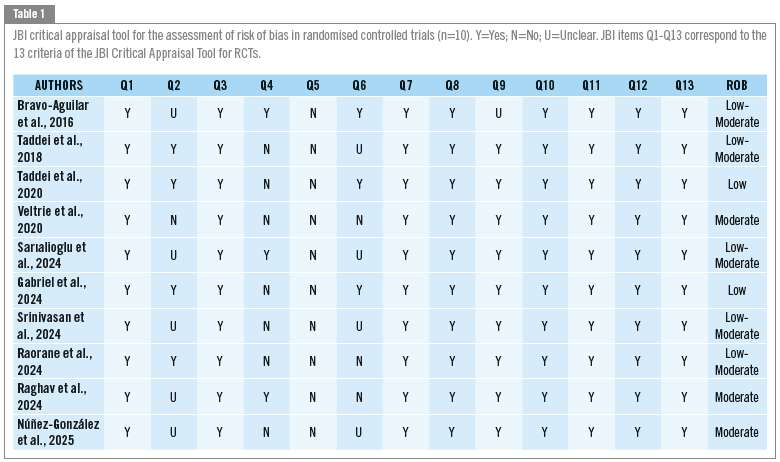
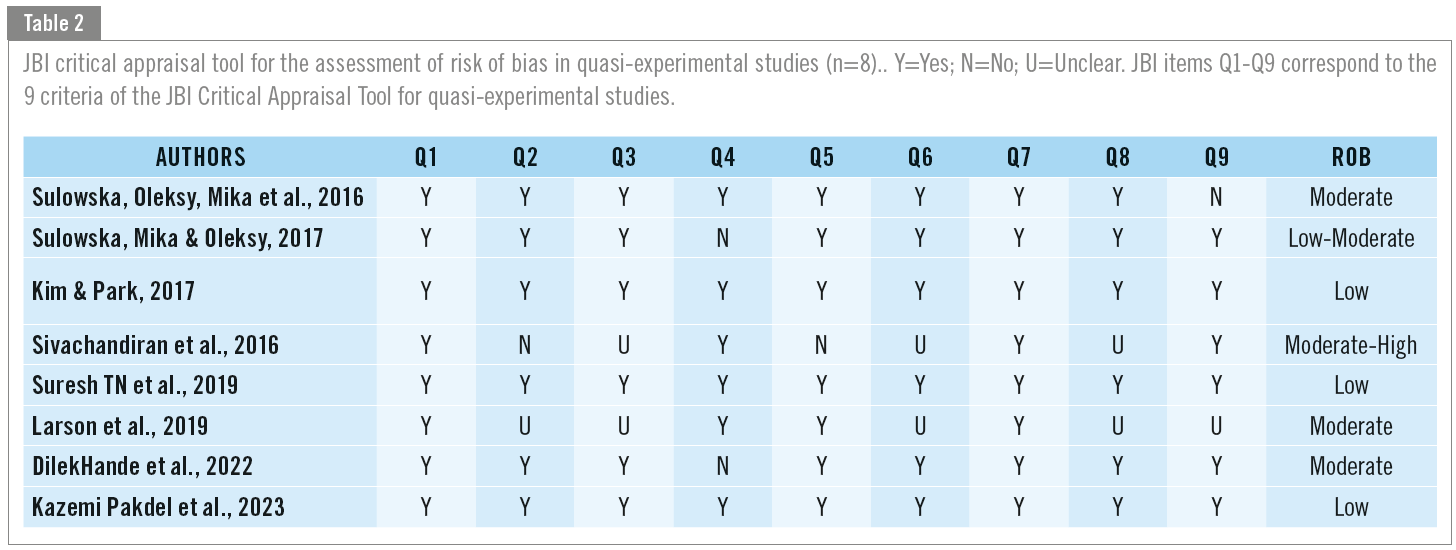
The Joanna Briggs Institute (JBI) Critical Appraisal Tools were used to evaluate methodological quality and risk of bias across the included studies. Each study was appraised against design-specific criteria, with items rated as „Yes“, „No“, „Unclear“ or „Not Applicable“. Five studies were rated as having a low risk of bias (7, 14, 15, 35) , six studies were rated low to moderate risk (1, 26, 27, 31, 33, 35) ,six studies were rated moderate risk (6, 17, 22, 25, 32, 37), and one study was rated moderate to high risk (28) .Common sources of bias across studies included inadequate blinding of participants and outcome assessors, incomplete reporting of allocation concealment, and limited intention-to-treat analysis. Tables 1 and 2 present the item-level JBI ratings for randomised and quasi-experimental studies, respectively.
Intervention Characteristics
A wide range of physiotherapy interventions was used across the included studies to target foot posture and balance in athletes. The most frequently used interventions were short foot exercises (SFE), balance and proprioceptive training, and corrective or multimodal exercise programmes. Interventions were delivered either as stand-alone protocols or combined with conventional strengthening and flexibility components.
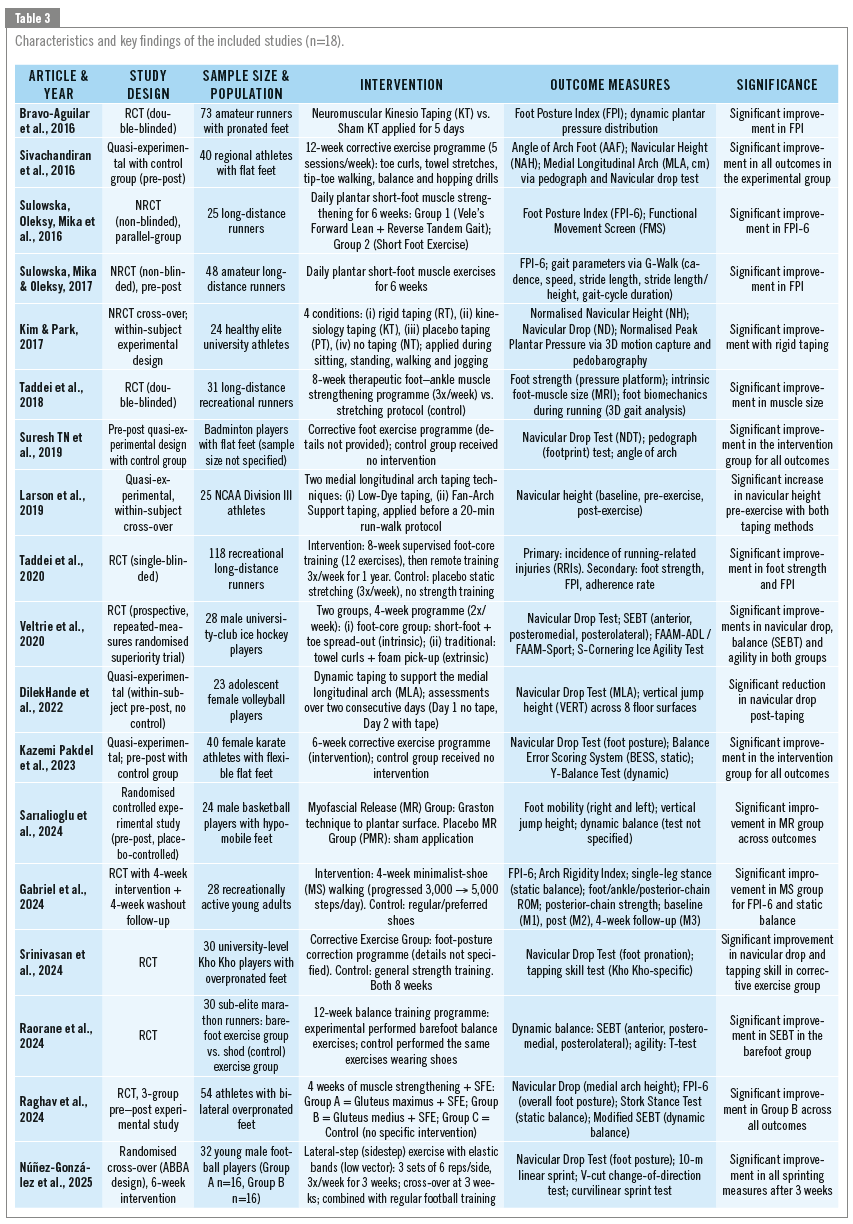
The frequency, intensity and duration of interventions varied considerably across studies. Session frequency ranged from 2 to 7 sessions per week (most commonly 3 sessions/week; daily exercise was specified in four studies (6, 15, 32, 33). Total programme duration ranged from single-session / acute-effect designs (6, 15, 17, 27) through short programmes of 4 weeks (7, 25, 37) and mid-length programmes of 6-8 weeks (14, 22, 31, 32, 33, 35) to longer programmes of 12 weeks (26, 28), and a one-year programme (35) that combined supervised and remote training. Individual session duration, where reported, ranged from approximately 15 to 60 minutes.
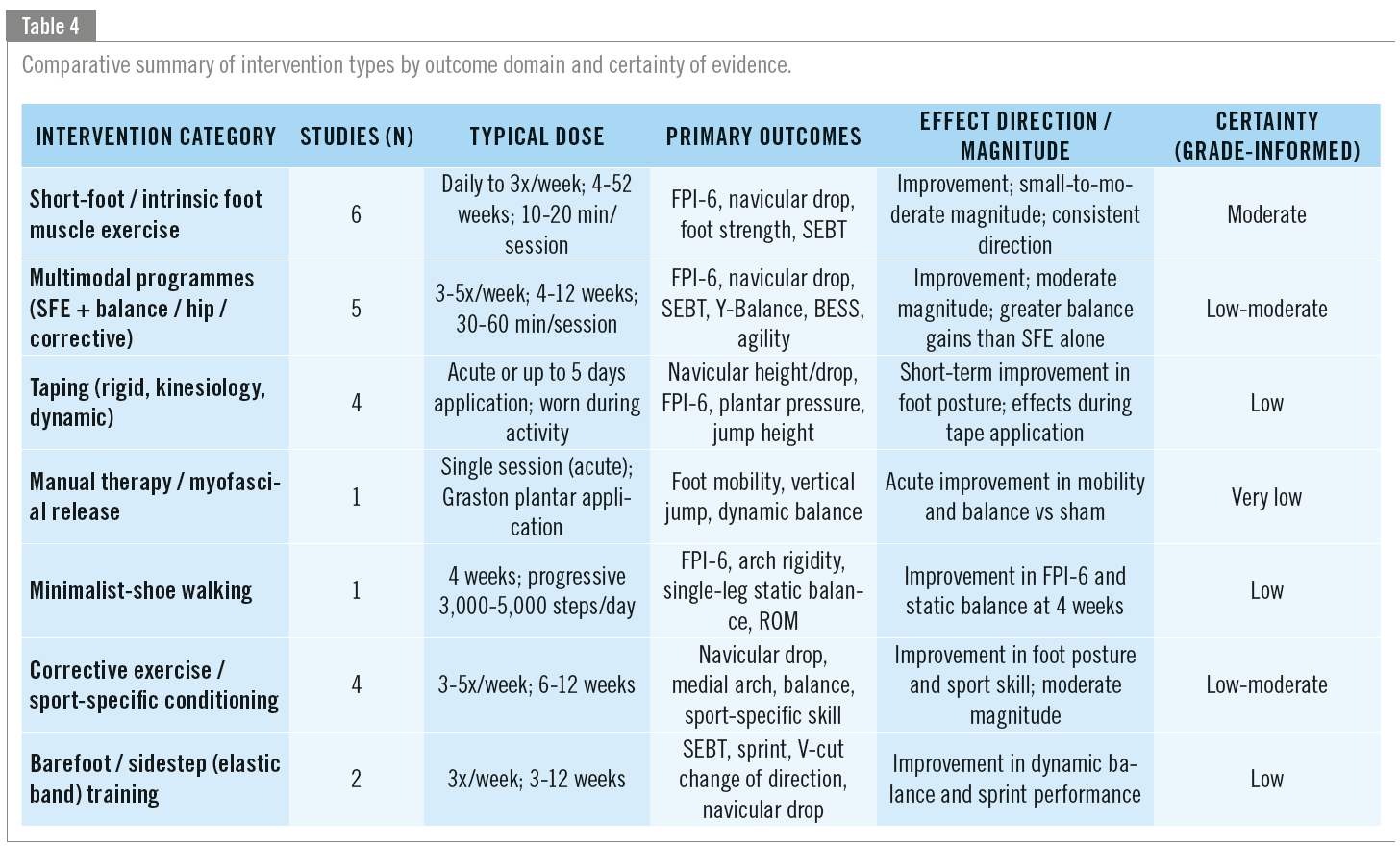
Supervision also varied: supervised clinic- or field-based delivery was reported in twelve studies, mixed supervised and home-based delivery in four studies, and fully home-based delivery with periodic check-ins in two studies. Adherence rates, when reported, were generally high in supervised programmes (>80%) and more variable in home-based or long-duration programmes. Further intervention-level details are shown in table 3, and a comparative summary by intervention type is provided in table 4.
Outcome Measures
Multiple outcome measures were used to evaluate the impact of physiotherapy interventions on foot posture and balance. For foot posture, the Foot Posture Index (FPI-6) was the most widely used tool, reported in multiple studies due to its standardised scoring system and clinical feasibility. Other foot-structure and alignment tools included the navicular drop test, medial longitudinal arch angle, normalised navicular height and the arch rigidity index. Balance assessments commonly used were the Y-Balance Test (YBT), the Star Excursion Balance Test (SEBT), the Balance Error Scoring System (BESS), single-leg stance tests and force-platform-derived measures of postural sway or centre-of-pressure displacement. These tests captured both static and dynamic balance components. Some studies additionally reported functional performance measures such as vertical jump, agility (T-test, V-cut change of direction), sprint tests and sport-specific skill tasks as indirect indicators of balance or performance improvement. No adverse events were reported in relation to the interventions across the included studies.
Short Foot Exercise (SFE) Interventions
Short Foot Exercises were the most frequently utilised intervention across the included studies, aiming to strengthen the intrinsic muscles of the foot and improve medial longitudinal arch support. SFE was typically delivered in supervised clinical protocols or as home-based regimens with periodic follow-up. Studies demonstrated that consistent SFE performance led to improvements in foot posture (as measured by FPI-6 and navicular drop) and dynamic balance, particularly in athletes with flat foot or poor postural control (14, 32, 33, 35, 37). Several studies combined SFE with proximal interventions such as hip strengthening, which further improved neuromuscular coordination and stability during athletic tasks (25). The exercises were generally well-tolerated across populations.
Hip and Core Strengthening Interventions.
Several studies incorporated hip abductor strengthening and core stability training alongside foot-specific exercises, based on the biomechanical premise that proximal stability contributes to distal control. Interventions targeting the gluteus medius, transversus abdominis and multifidus were associated with improvements in dynamic knee valgus, lower-limb alignment and balance performance. Combined distal and proximal training strategies appear to help correct faulty movement patterns and improve postural symmetry, outcomes that are clinically relevant for performance and injury prevention (7, 33).
Multimodal and Combined Training Interventions
Several studies employed multimodal physiotherapy programmes combining SFE, balance exercises, stretching and proprioceptive training. These integrated programmes addressed both structural and functional deficits in athletes with postural abnormalities. Studies using this approach reported improvements in foot posture, postural sway, agility and functional movement screening (FMS) scores. Multimodal approaches appeared particularly useful in athletes recovering from overuse conditions such as medial tibial stress syndrome and plantar fasciitis (7 ,22, 26, 32, 33).
General Exercise and Functional Training Interventions
General physiotherapy interventions such as dynamic warm-ups, functional task-specific drills and plyometric activities were included in some studies, particularly as part of return-to-sport rehabilitation. While not foot-specific, these interventions contributed to overall postural control, muscle re-education and coordination, which indirectly influenced foot posture and balance. Their inclusion supported transfer of training effects to sport-specific tasks and improved the ecological validity of the rehabilitation programmes (9, 15, 17, 27, 35).
Subgroup Synthesis by Intervention Type and Study Design
To address the heterogeneity of included studies, a structured subgroup synthesis was performed across intervention type and study design. By intervention type, SFE-only programmes (13, 32, 33, 35) consistently reported improvements in FPI-6 and navicular drop of moderate magnitude, with smaller but consistent balance gains. Multimodal programmes combining SFE with proximal strengthening (25) or with balance training (14, 26, 37) produced larger apparent gains in dynamic balance (SEBT/YBT) than SFE alone, although direct between-study comparison is limited by heterogeneous outcome reporting. Taping interventions (1 ,6, 15, 17) generated clear short-term improvements in foot posture markers (navicular height and drop, FPI-6) but the sustainability of these effects beyond the taping period was not established. Manual therapy (myofascial release) and minimalist-shoe walking (7, 27) produced improvements in foot mobility and FPI-6 respectively over short time frames. By study design, the 10 RCTs tended to report more conservative effect estimates than the 8 quasi-experimental studies, consistent with the expectation that less-controlled designs may overstate intervention effects; this pattern is compatible with the observed risk-of-bias distribution, in which all four moderate-to-high-risk designations occurred in quasi-experimental or cross-over studies.
Comparative Summary of Intervention Types
To assist interpretation, table 4 summarises for each major intervention category the number of contributing studies, typical dose, principal outcomes reported, direction and approximate magnitude of effect where effect sizes were available, and an overall certainty-of-evidence rating.
Certainty of Evidence Summary
Applying a GRADE-informed appraisal across domains, overall certainty for the foot-posture outcome (FPI-6 / navicular drop) was rated moderate starting from high given the preponderance of RCTs contributing to this outcome, then downgraded one level for inconsistency arising from differences in intervention dose and target population. Overall certainty for the balance outcome (SEBT / Y-Balance Test / BESS) was rated low to moderate downgraded for inconsistency (differing balance tools across studies) and imprecision (small samples, many studies n<40). Certainty for performance outcomes (jump, sprint, sport-specific skill) was rated low downgraded for indirectness (outcomes not uniformly reported) and imprecision. These ratings should be considered when drawing clinical inferences from the evidence base.
Discussion
Athletes place considerable biomechanical and physiological demands on the lower extremities, and the foot complex in particular. Foot posture and balance are central to both athletic performance and injury avoidance, and disturbances such as excessive pronation or supination can influence balance, movement mechanics and overall functional stability. The present systematic review synthesises evidence from 10 RCTs and 8 quasi-experimental studies evaluating the effectiveness of physiotherapy interventions for improving foot posture and balance in athletes. Across the included evidence, targeted strategies particularly foot-specific exercise, proprioceptive and balance training, neuromuscular re-education, and selected taping or manual-therapy approaches were associated with improvements in foot alignment and postural control outcomes.
The majority of included studies examined short foot exercises (SFE) as a core intervention. SFE activates the intrinsic foot muscles, particularly the abductor hallucis, which contribute to maintenance of the medial longitudinal arch and foot stability. Programmes of 4-6 weeks of SFE produced significant improvements in FPI-6 scores in athletes with pronated feet (11, 13, 18), consistent with the proposition that intrinsic-muscle training restores active arch support and attenuates compensatory pronation patterns common in high-impact sport.
Balance outcomes were also consistently improved in studies that combined SFE with proprioceptive or balance training. For example, combined SFE and balance training produced greater improvements in dynamic postural stability than balance training alone (13), supporting a synergistic effect between intrinsic foot-muscle activation and neuromuscular control. Balance was assessed with validated tools including the SEBT and force-platform measures, giving clinical credibility to these findings. Improvements in dynamic balance are relevant for performance in sports that require rapid changes of direction (soccer, basketball, kho kho) and for reducing risk of overuse injuries such as medial tibial stress syndrome and ankle sprain.
Combining SFE with proximal strengthening particularly gluteus medius training produced additive benefits for navicular drop, FPI-6 and single-leg stance performance in athletes with overpronation. Addressing both distal and proximal contributions via a kinetic-chain approach appears to offer a more comprehensive rehabilitation strategy than foot-focused training alone.
Several studies incorporated neuromuscular training, whole-body vibration or plyometric activity to enhance sensorimotor integration and proprioceptive acuity, which are essential for balance under dynamic athletic conditions. Balance training with visual feedback produced superior outcomes in balance and foot posture compared with conventional strengthening (29) , consistent with the importance of multi-sensory training environments in high-level sport.
Implications for Injury Prevention and Athletic Performance
Improvements in foot posture and balance have direct implications for injury prevention in athletic populations. Prospective cohort data indicate that runners at either extreme of the FPI-6 scale whether strongly pronated or supinated are at increased risk of running-related injury, with pronation in particular linked to medial tibial stress syndrome, plantar fasciitis, tibialis posterior dysfunction and patellofemoral pain (3) .By shifting FPI-6 scores towards neutral and by reducing navicular drop, the interventions examined in this review target modifiable biomechanical risk factors for these conditions. The largest RCT in the evidence base (n=118) reported that a one-year foot core training programme produced a reduction in the incidence of running-related injury together with improvements in foot strength and FPI-6, providing the strongest single-study evidence to date that intrinsic foot training can translate into injury-incidence benefits in athletic populations (35).
From a performance perspective, improvements in dynamic balance (SEBT, Y-Balance Test) and in sport-specific tasks (change of direction, sprint, jump, sport-specific skill) following the interventions suggest clinically meaningful transfer beyond the foot-posture outcome. Mechanistically, better arch support reduces energy dissipation during the stance phase, and enhanced postural control supports more efficient force transmission during propulsion and landing. This is consistent with improvements in vertical jump height after myofascial release (27), in sprint and change-of-direction performance after sidestep training with elastic bands (22), in agility and SEBT scores after foot-core training (37), and in sport-specific skill (tapping test) after corrective exercise in kho kho players (31). Taken together, the evidence supports integration of foot-posture and balance training into standard athletic preparation as a dual-purpose strategy for injury prevention and performance enhancement, while recognising that the relative contribution of each intervention component remains to be established in head-to-head trials.
A practical implication for clinicians and coaches is that sport-specific programming appears to matter: studies in runners emphasise SFE and intrinsic foot strengthening, whereas studies in field-sport athletes emphasise balance and agility components, and studies in court-sport athletes emphasise taping and myofascial techniques for short-term support around competition. Selecting interventions that match the mechanical and positional demands of the target sport rather than applying a generic protocol is likely to maximise transfer.
Interventions were generally well tolerated across the included studies, with no reports of adverse events. Adherence rates were high, particularly in supervised or partially supervised programmes, supporting integration of these strategies into team-based or individual training regimens with minimal disruption. However, adherence data were reported inconsistently across studies: only three studies quantified adherence as a primary feasibility metric, and drop-out rates were either unreported or not disaggregated by study arm in several studies. This limits the confidence with which feasibility can be inferred for real-world implementation, particularly for longer or home-based programmes.
Improvements in foot posture and balance following these interventions may be attributable to several physiological adaptations: increased activation and hypertrophy of the intrinsic foot muscles, enhanced proprioceptive feedback from the plantar surface, improved sensorimotor coordination, and recalibration of postural control systems within the central nervous system. Repeated stimulation and training appear to elicit neuroplastic changes that support functional balance and realignment of abnormal foot biomechanics. Beyond the physiological adaptations, improved foot posture and balance may enhance an athlete’s confidence in movement and reduce fear of re-injury, which in turn may support more efficient dynamic task performance and reduce compensatory loading patterns that contribute to fatigue and injury.
Strengths and Limitations
The strengths of this review include a prospectively registered protocol (PROSPERO CRD42024627239), a comprehensive multi-database search of six sources, application of validated JBI appraisal tools, and a structured descriptive synthesis across intervention categories with a GRADE-informed certainty appraisal. Several limitations of the underlying evidence base, however, warrant explicit and critical consideration.
First, clinical and methodological heterogeneity was pronounced across sports, foot-posture phenotypes, intervention content, dose, supervision, and outcome measurement and this heterogeneity precluded quantitative pooling. While the direction of effect is consistent across most studies, the magnitude of effect cannot be summarised precisely. Second, sample sizes were generally small (median n=29; only one study exceeded n=100), producing wide plausible ranges for effect estimates and increasing the risk of both type II error and overestimation of effect sizes.
Third, long-term follow-up data were limited. Only Taddei et al. (2020) followed participants over 12 months; most other studies reported outcomes only immediately after intervention or within weeks. The sustainability of improvements in FPI-6, navicular drop and balance measures beyond the training period therefore remains uncertain, and claims of lasting benefit are not adequately supported by the current evidence. Fourth, adherence and fidelity were variably reported, and home-based components were often described without a procedure for verifying completion; this is a material source of uncertainty for programmes intended for real-world self-management. Sixth, risk of bias was only low in 5 of 18 studies, with inadequate allocation concealment, limited blinding of outcome assessors and incomplete intention-to-treat analysis recurring across the evidence base; seven studies were in the moderate-or-higher risk category. Seventh, the inclusion of both RCTs and quasi-experimental designs, while reflecting the state of the evidence, means that the synthesis combines data of differing internal validity; subgroup consideration by design (reported above) is intended to mitigate but cannot eliminate this limitation. Finally, the review was restricted to English-language publications published from 2014 onwards, and relevant older or non-English studies may not be represented.
In summary, the present evidence supports a measured conclusion: physiotherapy interventions particularly short-foot exercises, balance and proprioceptive training, multimodal corrective programmes and selected taping or manual-therapy approaches produce short-term improvements in foot posture and balance in athletes, but the strength of this inference is constrained by heterogeneity, small sample sizes, limited long-term data and potential publication bias. Future research should prioritise adequately powered RCTs with standardised protocols, effect-size reporting with confidence intervals, active comparator arms, longer follow-up (≥ 12 months), verified adherence, and sport-specific outcomes, ideally pre-registered and reported in line with CONSORT and TIDieR guidance.
Conclusion
This systematic review of 18 studies (10 RCTs and 8 quasi-experimental studies; 703 athletic participants across 18 studies with reported sample sizes) indicates that physiotherapy interventions targeting foot posture and balance including short-foot exercises, balance and proprioceptive training, corrective exercise programmes, hip and core strengthening, and taping or manual therapies are associated with short-term improvements in foot alignment and in static and dynamic balance in athletes. The direction of effect is consistent across studies, but overall certainty of evidence is low to moderate owing to heterogeneity in populations and protocols, small sample sizes, variable risk of bias, and limited long-term follow-up. Within these constraints, the synthesis supports the selective and sport-specific integration of foot-focused physiotherapy into athletic preparation and rehabilitation, as part of broader kinetic-chain programming, rather than as a stand-alone protocol. Adequately powered, standardised and longitudinal RCTs are needed before stronger, more generalisable claims can be made.
Conflict of Interest
The authors have no conflict of interest.
Funding
This research received no specific funding from any funding agency in the public, commercial, or not-for-profit sectors.
Ethical Approval and Informed Consent
Ethical clearance for this systematic review was obtained from the Institutional Ethics Committee (approval number: 850). As this study involved secondary analysis of published data rather than primary human participants, written informed consent from individuals was not required. The review was conducted in accordance with the Declaration of Helsinki and relevant institutional guidelines. It was prospectively registered on PROSPERO (ID: CRD42024627239) and reported using PRISMA 2020 guidelines to ensure methodological and ethical transparency.
Data Availability
This research did not receive any specific grant from funding agencies in the public, commercial or not-for-profit sectors.
Author Contributions / Statement of Author Contributions
[Author 1]: Conceptualization, methodology, literature search, data curation, and writing – original draft. [Author 2]: Methodology, study selection, data extraction, and writing review and editing. [Author 3]: Data analysis, quality assessment, interpretation of results, and writing – review and editing.
All authors contributed to the final manuscript and approved the submitted version.
Acknowledgments
We would like to express our sincere gratitude to the institution’s head for providing the necessary facilities and a supportive environment for carrying out this project.
Summary Box
What Is Already Known
Aberrant foot posture (excessive pronation or supination) and impaired balance are recognised risk factors for lower-limb injury in athletes. Physiotherapy interventions - including short foot exercises, balance training and taping - have been investigated in isolation, but no contemporary synthesis had evaluated their collective effectiveness specifically within athletic populations.
What This Study Adds
This systematic review of 18 studies (10 RCTs; 673 athletes) provides the most comprehensive current synthesis of physiotherapy interventions for foot posture and balance in athletes, incorporating a GRADE-informed certainty appraisal, a structured subgroup synthesis by intervention type, and a dedicated analysis of implications for injury prevention and athletic performance. Short foot exercises, multimodal corrective programmes and proprioceptive training demonstrated consistent short-term improvements in FPI-6, navicular drop and dynamic balance, with multimodal approaches producing the largest apparent gains in postural stability.
Clinical Implications
Targeted foot-posture and balance training - particularly short foot exercises combined with proximal hip strengthening - should be integrated into sport-specific athletic preparation as a dual-purpose strategy for injury prevention and performance enhancement. Intervention selection should align with the mechanical demands of the target sport, and clinicians should interpret findings cautiously given low-to-moderate certainty of evidence, small sample sizes, and a lack of long-term follow-up data.
References
- Effectiveness ofneuromuscular taping on pronated foot posture and walking plantarpressures in amateur runners. J Sci Med Sport. 2016; 19: 348-353.
- Balance Training Programsin Athletes – A Systematic Review. J Hum Kinet. 2017; 58: 45-64.
- Predictors of Running-Related Injuries in Novice Runners Enrolled in aSystematic Training Program: A Prospective Cohort Study. Am J SportsMed. 2010; 38: 273-280.
- Rehabilitation of Ankle and Foot Injuries in Athletes.Clin Sports Med. 2010; 29: 157-167.
- Foot Posture and Balance in Marathon Runners,Badminton Players and Footballers. JESP. 2020; 16: 19.
- The Effect of Medial LongitudinalArch Supporting Dynamic® Tape Application on Plantar PressureDistribution in Adolescent Volleyball Players. Kinesiologia Slovenica.2022; 28: 30-42.
- A four-week minimalist shoe walkingintervention influences foot posture and balance in young adults–arandomized controlled trial. Melo RS, ed. PLoS ONE. 2024; 19:e0304640.
- The effect of foot posture on staticbalance, ankle and knee proprioception in 18-to-25-year-old femalestudent: a cross-sectional study. BMC Musculoskelet Disord. 2023; 24:547.
- Associationbetween Medial Longitudinal Arch with Static and Dynamic Balanceamong Recreational Badminton Players. Physical Education Theoryand Methodology. 2022; 22: 346-352.
- Effects of the Short-FootExercise on Foot Alignment and Muscle Hypertrophy in FlatfootIndividuals: A Meta-Analysis. Int J Environ Res Public Health. 2022; 19:11994.
- Evidence for Intrinsic FootMuscle Training in Improving Foot Function: A Systematic Review andMeta-Analysis. J Athl Train. 2023; 58: 941-951.
- Critical appraisal tools [Internet]. JBI. 2020 [31March 2025].
- JBI Critical appraisal checklist forsystematic reviews and research syntheses. J Can Health Libr Assoc.2024; 45: 180-183.
- A comparison in the muscle activity ofthe abductor hallucis and the medial longitudinal arch angle duringtoe curl and short foot exercises. Phys Ther Sport. 2011; 12: 30-35.
- The effect of corrective exercises on thefoot posture and balance in female karate athletes with flat foot. Sci JRehabil Med. 2023; 12: 114-131.
- Short-term effects of sports taping on navicular height,navicular drop and peak plantar pressure in healthy elite athletes: Awithin-subject comparison. Medicine (Baltimore). 2017; 96: e8714.
- Reliability and Radiographic Correlationof the Foot Posture Index-6: A Multi-Rater Analysis in Symptomaticand Asymptomatic Individuals. Diagnostics (Basel). 2025; 15: 1214.
- Navicular Height FollowingMedial Longitudinal Arch Taping Techniques and a 20-MinuteExercise Protocol. Athl Train Sports Health Care. 2019; 11: 280-286.
- Correlation of Foot PostureIndex With Plantar Pressure and Radiographic Measurementsin Pediatric Flatfoot. Ann Rehabil Med. 2015; 39: 10.
- Comparison of dynamicand static balance among professional male soccer players by position. JBodyw Mov Ther. 2023; 36: 307-312.
- The Effect of Taping on Foot Structure,FunctionalFoot Stability and Running Gait Patterns of the Foot. JSS. 2015; 3: 11-21.
- Biomechanical risk factors for exercise-related lowerlimb injuries. Sports Med. 1998; 26: 395-413.
- Effects of Sidestep Exercise with Elastic Bands on MultidirectionalSpeed Abilities and Navicular Drop in Young Male Football Players:A Randomized Cross-Over Trial. Appl Sci (Basel). 2025; 15: 2892.
- The PRISMA 2020 statement: anupdated guideline for reporting systematic reviews. BMJ. 2021; 372: n71.
- Association betweenthe Foot Posture Index and running related injuries: A case-controlstudy. Clin Biomech (Bristol, Avon). 2019; 61: 217-221.
- Enhancing Athletes’ Foot Stability:A Comparative Analysis of Gluteus Maximus and Gluteus MediusMuscle Strengthening Effects on Navicular Drop, Balance, and FootPosture Index in Over-Pronated Foot. Pamukkale J Sport Sci. 2024; 15:59-72.
- Effect ofbarefoot exercises on dynamic balance in sub-elite marathon runners.Journal of Society of Indian Physiotherapists. 2024; 8: 20-25.
- Acute Effects of Myofascial Release on Foot Mobilityand Performance in Basketball Players with Hypomobile Feet-ARandomized Controlled Trial. Life (Basel). 2024; 14: 1404.
- Effect of corrective exercises programmeamong athletes with flat feet on foot alignment factors. Int J Phys EducSports Health. 2016; 3: 193-196. Corpus ID: 78553546
- Epidemiology of ankle andfoot overuse injuries in sports: A systematic review. Scandinavian MedSci Sports. 2013; 23: 669-686.
- Effect of Flat Feet on Static and DynamicBalance in Adults. Indian Journal of Physiotherapy and OccupationalTherapy. 2021; 16: 76-85.
- Effect ofcorrective exercise strategies on tapping skill among university levelkho kho players with overpronated foot. Central European Journal ofSport Sciences and Medicine. 2024; 48: 37-46.
- The Influence of PlantarShort Foot Muscle Exercises on Foot Posture and FundamentalMovement Patterns in Long-Distance Runners, a Non-Randomized,Non-Blinded Clinical Trial. Buchowski M, ed. PLoS ONE. 2016; 11:e0157917.
- The influence of plantar short foot muscleexercises on foot posture and gait parameters in long-distancerunners. Journal of Kinesiology and Exercise Sciences. 2017; 27: 75-86.
- The effect of corrective foot exerciseprogram among badminton players with flat feet. International Journalof Yoga, Physiotherapy and Physical Education. 2019; 4: 32-34.
- Foot Core Training to PreventRunning-Related Injuries: A Survival Analysis of a Single-Blind,Randomized Controlled Trial. Am J Sports Med. 2020; 48: 3610-3619.
- Pathomechanics of Structural Foot Deformities. Phys Ther.1988; 68: 1840-1849.
- The Effects of Intrinsic Foot Muscle Strengthening on FootPosture, Balance, and Agility in Ice Hockey Players. MS. West VirginiaUniversity Libraries; 2020.
Professor & HOD, Department of Sports Physiotherapy,
KLE Institute of Physiotherapy,
Belagavi, KLE Academy of Higher Education
and Research, Deemed-to-be-University,
Belagavi, Karnataka, India, 590010
basavarajmotimath@klekipt.edu.in